Visual identity for startups is the set of design elements that makes a new business look like itself everywhere: logo, colours, typography, imagery style, icons and layout rules. A startup does not need a fifty page brand book on day one. It needs a lean, flexible system that is good enough to launch, easy to apply by a small team and ready to grow when funding or demand arrives. The mistake many founders make is treating identity as only a logo, or spending months and a large budget before they have even tested their offer. This guide covers what to build first, how to brief a designer, what to postpone and how to prevent early shortcuts from becoming expensive problems.
What is a visual identity and how is it different from a logo?
A visual identity is the whole visual system of a brand. The logo is one part. Colours, fonts, photography style, illustration, iconography, patterns, spacing and layout rules are the rest. Together they let people recognise you even when the logo is not visible, for example in a social media thumbnail or a packaging pattern.
This distinction matters for startups because a logo alone does not give a team the tools to produce a pitch deck, a website, an Instagram feed and an invoice that look related. A small system with consistent choices gives you that, and it costs far less than redoing everything later because early materials had no shared rules.
What should a startup define before design begins?
Design follows strategy. Before commissioning visuals, write down who your customer is, the problem you solve, what makes you different, your personality in three or four words and the feeling you want people to have. Include practical constraints: where the brand will appear most, such as app icon, packaging, shop board or LinkedIn, and what the budget and timeline allow.
If positioning is still uncertain, resolve it first, because a polished look cannot rescue unclear messaging. Our guide to brand positioning for startups shows how to define your place in the market. A clear brief gives a designer something to solve, and makes it easier to judge options without relying on personal taste.
What to include in your design brief:
What is the minimum visual identity a startup needs?
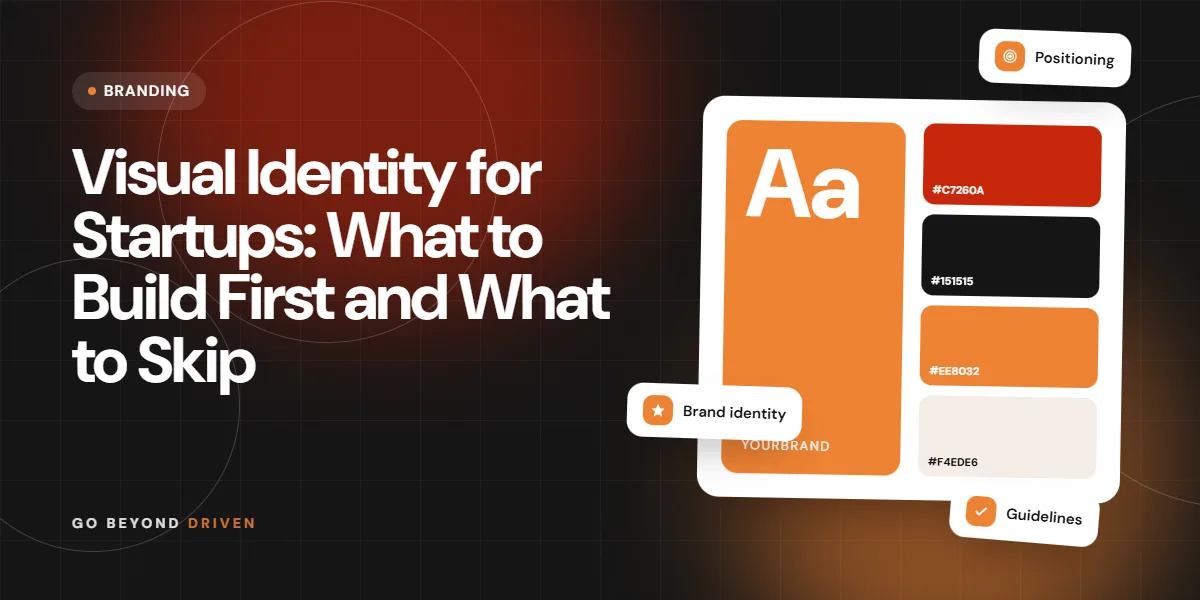
A minimum viable identity has six parts: a logo with a primary and a compact version, a colour palette with a main colour, a supporting colour and neutrals, one or two typefaces with sizes for headings and body text, a style rule for photography or illustration, a social profile picture and cover treatment, and a few templates for decks, posts and documents. Everything else can wait.
Keep choices few. A palette of three to five colours and a single typeface family with weights is enough to look professional. Avoid decorative fonts that are hard to read at small sizes, and choose licensed or open fonts that your whole team can install. The goal is to look coherent from the first investor meeting to the first customer purchase.
Add one distinctive device if your budget allows: a pattern, a shape taken from the logo, a recurring photo crop or a signature colour block. A single repeatable device does a surprising amount of work, because it lets even a simple social post feel like yours. It also gives a small team something easy to reuse without needing a designer for every task.

How do you design a logo that will last?
Aim for simple and distinctive. Test the logo at very small sizes, in one colour, on dark and light backgrounds and as a square icon. Avoid trendy effects such as gradients that do not reproduce well, and avoid over-literal imagery that limits your future. Delivered files should include vector formats and versions for screen and print.
Check that the name is secured before investing in design, as covered in our guide on how to name a brand. For process details, read our overview of the logo design process. Resist the temptation to use a free generator or copy a lookalike, since similar marks cause legal and recognition problems.
Think about where the logo will actually live. A founder in Mumbai selling through Instagram and WhatsApp will see the mark mostly as a tiny circle on a phone, so legibility at thumbnail size matters more than elegant detail. A startup selling to businesses will see it on proposals and LinkedIn banners, where a horizontal lockup helps. Design for your real use first.
FAQs: How do you design a logo that will last?
How many logo concepts should I ask for?
Two or three well-developed concepts are better than ten shallow ones. Ask the designer to explain the thinking so you can judge fit against your brief.
Do I need a different logo for the app icon?
Usually a simplified or compact version works better at small sizes. Plan it from the start so the icon feels related to the full logo.
How should startups choose colours and typography?
Choose colours that fit the personality and stand out against the competitors in your category. Test them on real screens, check text contrast and prepare print values for packaging or collateral. Our guide on colour psychology in branding covers associations and cultural context in India.
For type, pick a clear heading face and a highly readable body face. Check support for Hindi or Marathi if you plan to publish bilingual content, since many display fonts do not include Devanagari. Define simple rules for heading sizes, line spacing and alignment, so that decks, web pages and posts feel related without a designer on every task.
How do you brief and work with a designer or agency?
Share the strategy brief, three to five examples you like and three you dislike, with reasons, and the list of places the identity must work. Agree on deliverables, number of revision rounds, timeline and file formats at the start. Give feedback in terms of the brief, such as 'this feels too corporate for our audience', rather than only 'I do not like it'.
Ask who owns the final files and fonts, and make sure you receive editable source files. Consider phased work: logo, palette and type first, templates next, a fuller guide later. If you want end-to-end support, our branding agency in Mumbai works with founders from strategy to identity and launch material.
Deliverables to expect from an identity project:

Where can a startup save money, and where should it not?
Save by phasing work, reusing a small set of templates, using clean photography you shoot yourself in good light and skipping extras such as merchandise or large printed brand books until you need them. A modest identity done well beats a lavish one that the team cannot maintain. Spend on the pieces that appear most often and shape trust, such as the logo, the website and the pitch deck.
Do not economise on clarity, quality of execution or ownership. Unlicensed fonts, stock images with restrictive terms and designs borrowed from others create legal and reputational risk. Cheap work that must be redone after launch costs more than doing the essentials properly once. Put money where customers and investors will see the brand first.
Be careful with trends. Styles that dominate design feeds this year may look dated in two, and a startup rarely has the budget for a quick second identity. Choose timeless basics for the logo and palette, and let templates, illustrations and campaign visuals carry the trendier touches, since those are cheap to replace when tastes change.
How do you scale the identity as the startup grows?
Treat the first identity as version one. As the team, product range and channels grow, add components: expanded colour tints, icon sets, illustration style, motion rules, social templates and a fuller guide. Document decisions as you go so new hires and agencies do not reinvent them. Our brand guidelines guide shows what a more complete document looks like.
Protect consistency as people join. Assign an owner, keep a shared asset folder and run a light review every quarter. The principles in our brand consistency guide apply directly. When the identity no longer fits the business, plan a deliberate refresh rather than a gradual drift.
Final thoughts
A startup's visual identity should be lean, flexible and rooted in a clear strategy. Build the essentials, brief carefully, protect ownership and add detail as the business grows. If you want a fresh pair of eyes on your current look or a plan for your first identity, Go Beyond Driven offers a free marketing audit. Call +91 91378 79539 or email gobeyonddriven@gmail.com to get started.