
To write FAQ content well, collect the real questions customers ask before buying, answer each in the first sentence in plain words, add the detail that helps a decision, and place the FAQ where doubts arise, such as service pages, product pages and pricing pages. An FAQ is not a dumping ground for keywords or a list of questions nobody asks. Done properly, it removes friction, reduces repetitive calls and WhatsApp messages and gives search engines and AI assistants clear, quotable answers. For Indian businesses selling services where trust, price and timelines are the main worries, a sharp FAQ often does more selling than a longer brochure. This guide walks through finding questions, writing answers, structuring the page, adding schema and keeping it updated.
What is FAQ content and why does it matter?
FAQ content is a set of questions and answers about your business, product or service, written from the customer's point of view. It matters because most buyers have the same few doubts: how much does it cost, how long will it take, is it safe, what do I need to provide and what happens if I am not satisfied. If the page does not answer these, they leave or call.
It also suits how people search now. Many queries are phrased as questions, and search results and AI assistants often pull short direct answers from pages. A page that states the answer clearly in the first sentence is easier to quote. Our guide to answer engine optimisation explains this in more detail.
Where do you find the questions to include?
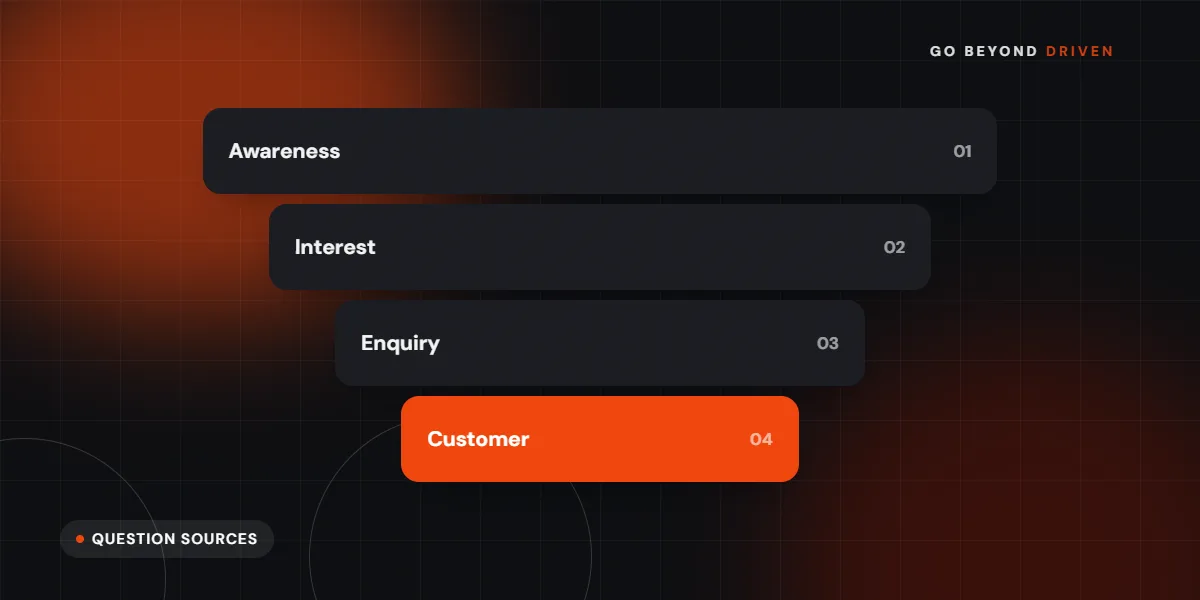
Start with your own team. Ask sales, support and reception which questions they answer weekly. Check WhatsApp chats, emails, contact form messages, call notes and online reviews. Then look at Google: type your service and city, and note autocomplete suggestions and the People Also Ask box. Search Console queries phrased as questions are another good source.
Group the questions by theme, such as pricing, process, timelines, eligibility, safety, comparisons and after-sales support. Remove duplicates and rank them by how often they appear. Keep real wording where you can, including how people in Mumbai speak, since customers search in everyday language, not in industry terms.
Where to mine real questions:
How do you write a good FAQ answer?
Answer in the first sentence. If the question is whether you provide a service in Thane, begin with Yes, we serve Thane and nearby areas, then add details. Keep answers to roughly 30 to 100 words, in plain words, and avoid jargon. Make each answer complete on its own, since it may be shown without the rest of the page.
Be honest where an answer depends on circumstances. For cost, give a hedged range and the factors that change it. For timelines, say typically and explain what can delay it. If the real answer is it depends, say what it depends on. Vague, evasive answers cost trust, and people notice when the price question is dodged.
Read each answer as the customer would, on a phone, and cut any sentence that does not help them decide. If an answer needs a table or steps, consider linking to a fuller page instead of stretching the FAQ. Short, scannable answers get read more often.
FAQs: How do you write a good FAQ answer?
How many FAQs should a page have?
Between five and ten is common for a service page. Include only questions that real customers ask, and add more only if each one is useful.
Should every FAQ answer include a link?
Only when a link genuinely helps. Link to a related guide or booking page where it saves the reader a step, and avoid loading answers with links.
Where should FAQs sit on your website?
Place FAQs near the point of doubt. Pricing questions belong on or near the pricing section. Delivery and returns belong on product pages. Process and eligibility questions fit service pages. A single general FAQ page is useful as a hub, but scattered questions on the right pages usually help conversions more.
Use clear headings and expandable sections only if the answers still load in the page text so that search engines can read them. Put the most important questions first. Add a call to action after the FAQ, such as a button to book a call or message on WhatsApp, because this is often the moment a reader decides. See our landing page design best practices for layout.
Should you add FAQ schema markup?
Schema markup is code that describes your content to search engines. FAQ markup can be added to pages that contain genuine question and answer content. Google has limited how often FAQ rich results appear in search, so do not expect a visible change. Markup still gives a clean, structured description of the page.
Make sure the marked-up questions and answers match what visitors can see on the page, and never mark up hidden or promotional text. Test the page with Google's Rich Results Test or the Schema Markup Validator. Our schema markup guide explains how to add and check it.
How do FAQs help SEO and AI search?
FAQs help by matching the way people ask. They cover long-tail queries that main copy may miss, and they give concise answers that search features and AI assistants can use. Well-written FAQs also reduce bounce by solving doubts quickly, which supports the page's purpose.
No format guarantees a feature or ranking. Treat FAQs as a way to be clearly helpful. Do not copy answers from other sites, avoid stuffing the same keyword into every question and keep each answer specific to your business. Our notes on SEO for Google AI Overviews cover how answer-style content is used.
Qualities of a strong FAQ:

What does a good FAQ look like for a Mumbai business?
Take an interior designer in Powai. Useful questions would be how long a 2 BHK interior project usually takes, whether the designer handles society permissions, what is included in the quoted price, how payment stages work, how monsoon affects timelines and whether site visits are possible on weekends.
Each answer starts with the point, then adds context: typically several months depending on scope, with approvals and material lead times as variables. A good FAQ prepares the customer for the first meeting, so the conversation begins at a more useful place and fewer surprises arise later.
How do you keep FAQs updated?
Review FAQs every quarter. Check prices, timelines, policies, GST references and service areas. Add new questions from recent enquiries, and remove ones that no longer apply. Outdated answers cause disputes, and a wrong answer on a page that ranks can mislead many people.
Assign an owner, such as the person who handles enquiries, and keep a short log of changes. If your sales team keeps hearing a question that the page does not answer, treat that as a task to add it this week. Our website maintenance checklist includes content reviews.
What mistakes should you avoid in FAQ content?
The first mistake is inventing questions to fit keywords, such as repeating the service name in every line. Readers notice, and so does the quality review that search engines run. The second is writing answers that only say contact us. If a question is about price, give a range and the factors involved, then invite a conversation.
Other common errors include very long answers that bury the point, copied text from competitors, outdated policies, and FAQs on one page that contradict another page. Check that the delivery, refund and pricing statements agree everywhere on the site. Honest, consistent terms also make your team's follow-up calls shorter and easier.
Also avoid hiding important terms in FAQs to dodge clarity elsewhere. If a condition affects the purchase, such as a minimum order or an extra charge, say it on the main page and repeat it in the FAQ. Clear terms reduce disputes and protect your reputation.
Final thoughts
Knowing how to write FAQ content comes down to listening to customers, answering plainly and putting answers where doubts appear. Start with the ten questions your team hears most, write each answer in the first sentence, and review quarterly. If you want help building FAQ and service content that supports search and enquiries, Go Beyond Driven offers content marketing services. Start with a free marketing audit, call +91 91378 79539 or email gobeyonddriven@gmail.com.