
A content repurposing strategy is a repeatable plan for taking one piece of original content, such as a webinar, a founder interview or a detailed blog, and reshaping it into several formats for different channels. It is not copy and paste. A 40 minute client call can become a blog, five short videos, a LinkedIn carousel, an email and a WhatsApp broadcast, each written for how people use that platform. For Indian small businesses with one marketer and a tight budget, this is often the only realistic way to stay visible every week. This guide shows how to pick the right source, map formats to channels, build a simple workflow and avoid the mistakes that make repurposed content feel lazy.
What is content repurposing and why does it work?
Content repurposing means adapting an existing asset for a new format or audience rather than starting from a blank page. The research, the opinions and the examples are already done, so you only pay for the reshaping. That is why it suits teams that publish thin because they run out of time, not because they run out of ideas.
It also works because audiences are spread out. One customer reads your emails, another watches Instagram Reels on the train, and a third only opens WhatsApp. Saying the same useful thing in three places reaches all three without making anyone read the same words twice. Repetition across formats also builds the recall that makes people choose you when they are ready to buy.
Which content should you repurpose first?
Start with content that already proved itself. Look at your analytics for blog posts with steady organic traffic, Instagram posts with saves and shares, emails with high clicks and sales calls where prospects keep asking the same question. These have shown real interest, so extra formats carry less risk than a fresh experiment.
The best raw material is long and opinionated: a webinar, a podcast, a detailed how-to, a founder's talk at an event or a recorded workshop. Thin content gives you nothing to cut from. If you have little to start with, record a 20 minute conversation answering the ten questions customers ask most, and use that as your source.
A quick test helps: if a customer has asked about it more than twice in a month, or if it solved a problem you now explain on every sales call, it deserves more than one format. Write these candidates on a list and rank them by how often the topic comes up in real conversations.
Strong source content to look for:
How do you match one idea to different formats?
Break the source into single ideas first. A 2,000 word blog on choosing a contractor might hold six distinct points, a story and a checklist. Each point becomes its own post. The story becomes a Reel script. The checklist becomes a carousel or a downloadable PDF. The main argument becomes the opening of a newsletter.
Then choose the format by what the point needs. A step-by-step process suits a carousel. A strong opinion suits a short talking-head video. A number or comparison suits a single image. A longer explanation suits email or a LinkedIn post. If a point only needs two lines, do not stretch it into a video just because you can.
FAQs: How do you match one idea to different formats?
How many formats should one idea become?
Three to six is a sensible target. More than that starts to feel repetitive to followers and eats production time. Choose the formats your audience actually uses, not every available one.
Can I repurpose old content?
Yes, if the advice is still correct. Update dates, prices and examples first, then reshape it. Old evergreen guides often perform better as new formats than as fresh topics.
What does a repurposing workflow look like in practice?
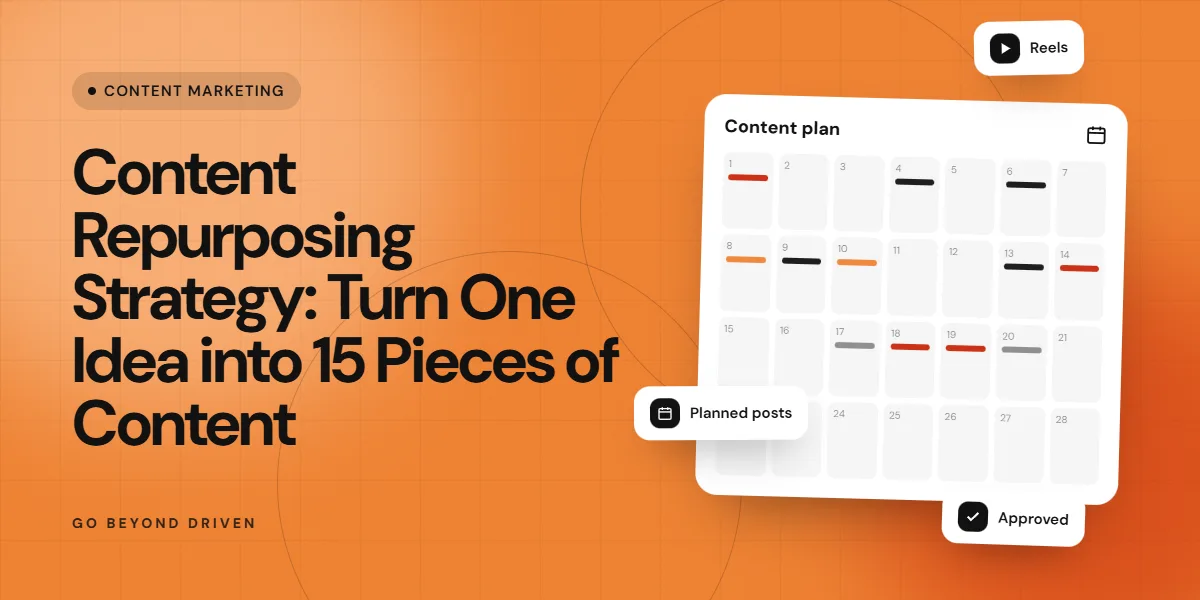
Keep it to five steps. Record or write the source once. Transcribe it, using an auto transcription tool and a manual clean-up. Highlight the five to eight strongest points, quotes or stories. Assign each one a format and a channel. Finally, schedule the pieces across two to four weeks instead of publishing everything in one burst.
Spreading release dates matters. A founder talk can feed Monday's LinkedIn post, Wednesday's Reel, Friday's email and the following week's blog, with each piece pointing to the next. That staggered rhythm keeps your calendar full, and our content calendar template guide shows how to lay it out so nothing is forgotten.
How do you repurpose for Instagram, LinkedIn, email and WhatsApp?
Each channel rewards a different shape. Instagram favours a strong visual hook in the first second and short, spoken ideas, so turn one point into a Reel using a script from our guide to Reels script writing. LinkedIn suits a personal story with a lesson, written in short lines. Email suits the fuller explanation, with one link to act on.
WhatsApp is often overlooked. A short broadcast with one tip, one image and a clear reply prompt can work well for existing customers who gave permission to hear from you. Keep it brief, relevant and infrequent. Never forward the same long text you posted elsewhere, because a message on someone's personal phone has to earn its place.
Common channel shapes:
Which tools make repurposing faster?
You do not need an expensive stack. A transcription tool, a simple video editor with automatic captions, a design tool with carousel templates and a scheduling tool cover most needs. Free or low cost plans are usually enough for a small team, though pricing and features change often, so check before you commit.
Tools save time on mechanics, but judgement still decides quality. AI summaries can pull out topics fast, yet they often miss the one story or opinion that makes your business sound like itself. Use them to find candidates, then write the final versions yourself. Our notes on the AI content writing guide explain where automation helps and where it hurts.

How do you keep repurposed content from feeling repetitive?
Change the angle, not only the format. The same webinar can produce a post about the mistake people make, another about the fix, and a third that answers an objection from the question session. Each stands alone, so a follower who sees all three feels they learned three things, not one.
Adjust tone, length and the opening line for every channel, and add something new where you can: a fresh example, a recent customer question or a seasonal angle such as Diwali buying or monsoon delays. If the same graphic and caption appear on every platform within an hour, audiences notice and engagement usually falls.
Keep a simple log of which angle each piece used. When the same point reappears three weeks later with a new example, nobody minds. When the same sentence reappears, it looks careless, so check the log before you schedule the next round.
How do you measure whether repurposing is paying off?
Track output against effort and results. Note how many hours the source took, how many pieces came from it and what each piece achieved. Reach and saves show interest. Link clicks, enquiries and email replies show intent. Over a quarter, compare cost per piece and enquiries per source against your standalone posts.
Be careful about conclusions from a single piece. A Reel may get little reach while the same idea as an email brings two enquiries. Our content marketing metrics guide explains which numbers matter at each stage, so you stop optimising for likes.
What does a month of repurposing look like for a Mumbai business?
Take a physiotherapy clinic in Borivali that records one 30 minute talk on back pain for desk workers. Week one: a blog summary and a LinkedIn post about the three posture mistakes covered. Week two: two short Reels, one showing a desk stretch, one busting a common myth. Week three: an email with the full video and a carousel of the stretch routine.
Week four: a WhatsApp message to existing patients offering a short posture check, plus a post answering the best question from the talk's audience. One recording has fed six or seven touchpoints, and each links back to a single page where people can book. The same pattern works for a CA explaining GST changes or a coaching institute explaining exam strategy.
Final thoughts
A good content repurposing strategy gives small teams a steady presence without burning out. Pick sources that have already worked, split them into single ideas, match each idea to the right format and release them on a calendar. If you would like help designing a workflow or producing the pieces, Go Beyond Driven offers content marketing services for Mumbai and Indian brands. Start with a free marketing audit, call +91 91378 79539 or email gobeyonddriven@gmail.com.