
A co-branding strategy is a planned partnership in which two or more brands appear together on a product, service or campaign so each borrows the other's trust, audience and strengths. The idea is simple: your customers already believe in your partner for something you are not known for, and the reverse is also true. Done well, it lowers the cost of reaching new buyers and makes an offer feel more credible. Done badly, it confuses customers and can damage both names. This guide covers the main types of co-branding, how to pick a partner who fits, what to agree in writing, how to launch and how to measure whether the partnership was worth the effort.
What is co-branding and why do brands do it?
Co-branding means two separate brands join to create something neither would launch alone, such as a co-designed product, a shared store counter, a bundled offer or a joint campaign. Each brand keeps its own identity, but customers see both names together and transfer some trust from one to the other.
Brands do it for four practical reasons. It gives access to a partner's audience without paying for every impression. It adds credibility, because a respected partner vouches for you. It shares production, media and creative costs. And it keeps existing customers interested with something fresh. For a small business, a good partnership can do in a month what would take a year of solo advertising.
What are the main types of co-branding?
Product co-branding creates one new product from two brands, such as a limited edition collaboration between a fashion label and an artist. Ingredient co-branding places one brand inside another's product, like a known fabric or technology named on the label. Promotional co-branding connects two brands for a campaign, contest or bundle without changing the product itself.
There is also channel or retail co-branding, where one brand appears inside another's space, such as a cafe counter inside a bookstore or a skincare brand offering treatments inside a salon. Choose the type that matches your goal. If you want awareness, a campaign may be enough. If you want a lasting new offer, a joint product needs deeper commitment and clearer rules.
Common co-branding formats:
How do you choose the right co-branding partner?
Look for a partner who shares your customer but not your product. A bridal jeweller and a wedding photographer serve the same family at the same moment, yet they do not compete. Check that their quality, price level and values match yours, because customers will judge the pair together. A premium brand paired with a discount brand rarely works.
Then test the relationship before committing. Read their reviews, look at how they treat customers and staff, ask how they handled past collaborations and see whether their social presence is active and honest. Meet the people who will actually run the project. A partner with a famous name but slow decisions will cost you more than a smaller one that responds the same day.
Which partnership ideas suit small and local businesses?
Small businesses can start with simple, low risk pairings. A Bandra cafe and a local florist can run a weekend brunch with a flower stem on each table. A gym and a nutrition coach can offer a joint 30 day plan. An interior designer and a modular kitchen maker can show a finished home together and refer clients both ways.
Keep the first project small and time limited. Choose one offer, one landing page, one shared WhatsApp number or form and a clear end date. If it works, repeat it or extend it. If it does not, you have lost little. Our digital marketing for small business guide helps you decide where to promote the offer.
What should a co-branding agreement cover?
Put the essentials in writing before any creative work begins. Cover who owns the new product or content, how each brand's name and logo may be used, who handles production and customer service, how costs and revenue are shared, the start and end dates and what happens to unsold stock or leftover assets. Ask a lawyer to review anything involving money, intellectual property or exclusivity.
Agree on approval rights and a way to resolve disagreements. Decide who signs off on designs, copy and influencer posts, how fast each side must respond and what triggers an early exit, such as a public controversy or a quality failure. A short clear document written in plain language prevents the most common co-branding fights, which are about credit, cost and control.
Terms to settle in writing:
How do you design a joint identity without losing your own?
Keep both brands recognisable and let a simple rule govern how they appear together. Many pairs agree on a lock up, where logos sit side by side with equal weight and fixed spacing, plus a shared colour or pattern for the campaign. Avoid mixing the two visual systems into a muddle. If one brand's guidelines are stricter, follow those for the shared material.
Write down the rules in a one page sheet: logo placement, colours, tone, words to avoid and sample captions. This is a mini version of brand guidelines built for the partnership. It saves arguments later and helps designers, creators and shop staff present the offer consistently across Instagram, packaging and the website.
How should you launch and promote a co-branded offer?
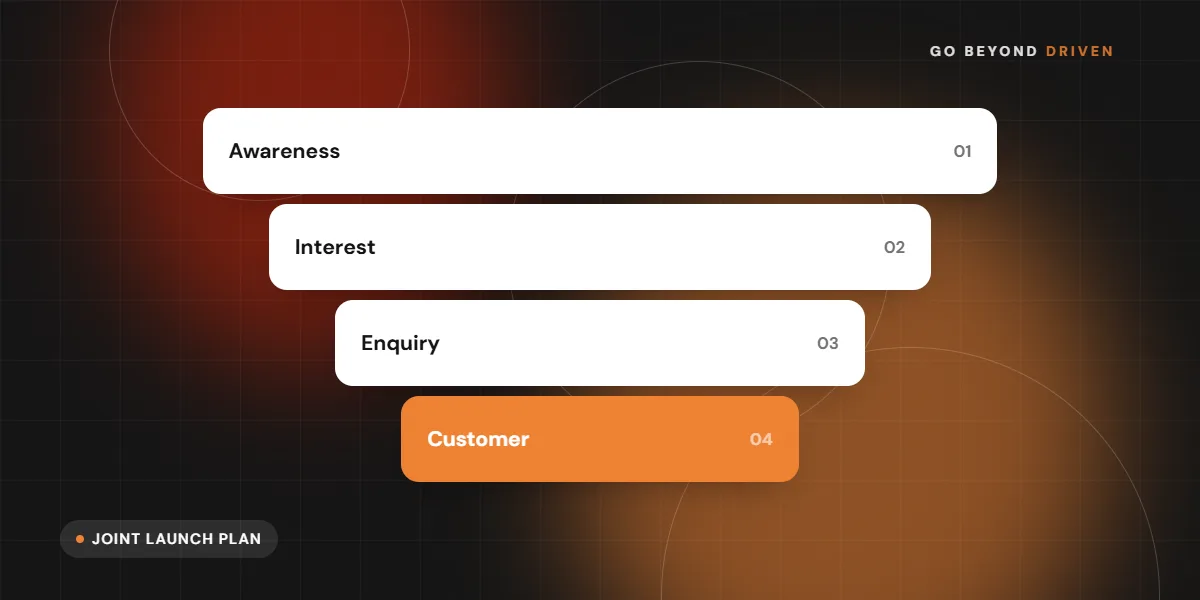
Build a short launch calendar that both teams can follow: a teaser, the announcement, the main push and a follow up with customer stories. Each brand should post on its own channels, tag the other and send the offer to its email and WhatsApp lists. Use one shared link or form so you can see which brand sent each enquiry.
Add a reason to act now, such as a limited batch, a numbered edition or an event date, but avoid heavy discounting, which weakens both brands. Collaborative content tends to travel further when it shows real people and process. A short behind the scenes reel from both sides, a joint live session or a guest post can reach each partner's followers. Our content marketing team plans and produces this kind of launch.
FAQs: How should you launch and promote a co-branded offer?
Should both brands pay for advertising?
Usually yes, in an agreed split. If one brand brings far more audience, it may carry less paid spend but more of the creative work. Write the split down before launch.
Who owns the customer data from a joint offer?
Decide this in advance. Many partners keep their own leads and share only aggregate results, which respects customer consent and avoids later disputes.
What are the risks of co-branding?
The main risks are reputation damage, unequal effort, brand dilution and confused customers. If your partner delivers a poor product or faces a public controversy, some of that lands on you. If one side does most of the work, resentment builds quickly. If the pairing makes little sense, customers see a stunt rather than a reason to buy.
Reduce risk by starting small, choosing partners carefully, agreeing quality standards and keeping an exit clause. Monitor comments and reviews during the campaign so you can respond fast. Be ready to explain the partnership in one sentence. If you cannot say why the two brands belong together, your customers probably will not understand it either.
How do you measure whether co-branding worked?
Set goals before launch and track them with simple numbers. For awareness, look at reach, new followers and branded searches for both names. For sales, track units, revenue and the share coming from new customers. For leads, count enquiries, bookings and cost per enquiry. Use unique links, codes or forms for each partner so attribution is clear.
After the campaign, hold a short review with your partner. Compare results with the goals, note what customers said, check the effect on your brand perception and decide whether to repeat, expand or stop. Keep the numbers modest and honest. A partnership that brings steady, qualified customers is more valuable than one that creates a brief burst of attention.
Final thoughts
A good co-branding strategy comes down to fit, clarity and follow through. Pick a partner who shares your customer, agree the rules early, present both brands with care and measure honestly. If you would like help planning a partnership or want a review of your brand before you approach one, book a free marketing audit with Go Beyond Driven, call +91 91378 79539 or email gobeyonddriven@gmail.com.