
Digital marketing for small business means using your website, Google, social media, WhatsApp and email to find customers and turn them into repeat buyers, at a scale and budget that suit a small team. You do not need to be everywhere. A small shop, clinic, studio or service firm usually gets the best return from a handful of well-chosen activities: a clear website, a complete Google Business Profile, a way to capture enquiries, a simple follow-up routine and one paid or organic channel done well. This guide walks through the order to do things, how to choose, and the traps that waste money.
What does digital marketing for a small business include?
It includes everything that helps customers find, trust and contact you online: your website, local search listings, social media pages, paid ads on Google and Meta, WhatsApp communication, email messages and online reviews. It also includes the boring but important parts, such as tracking where enquiries come from and replying quickly.
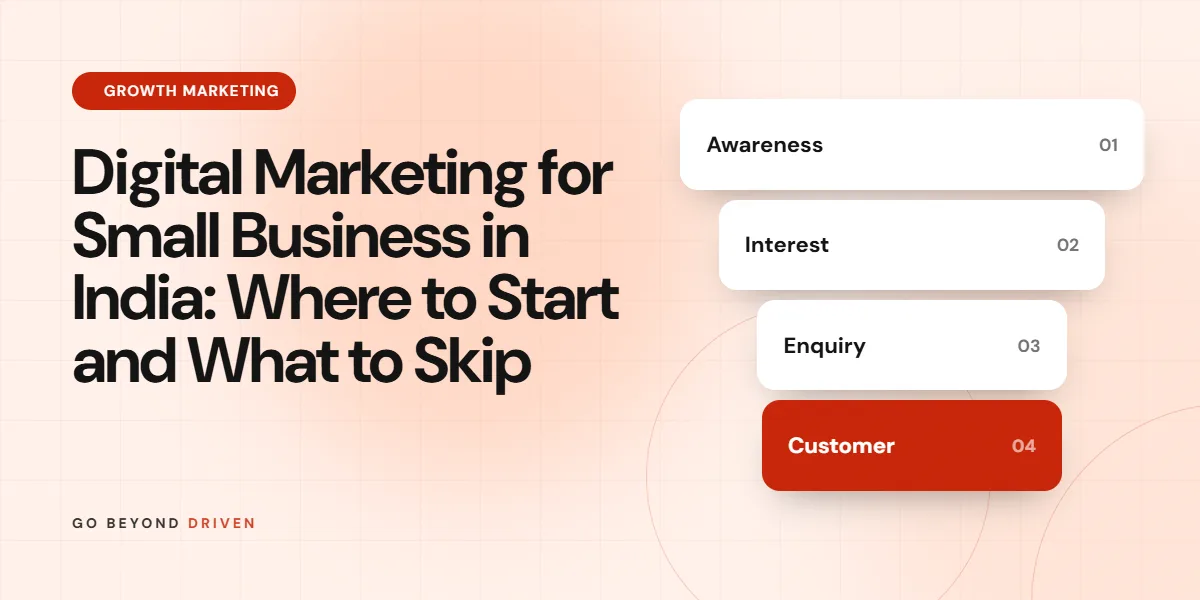
Think of it as a system, not a list of tools. Visibility brings people in, your website and profiles build trust, an enquiry method captures interest, and follow-up turns interest into sales. If any link is missing, effort elsewhere leaks away. A beautiful Instagram page with no phone number or booking link is a common example.
What should a small business set up first?
Start with five foundations. One, a mobile-friendly website with services, prices or price ranges, photos, location and a clear call to action. Two, a fully completed Google Business Profile. Three, a WhatsApp Business account with a catalogue and quick replies. Four, basic tracking for calls, forms and WhatsApp clicks. Five, a simple way to collect customer details and reviews.
These cost little and compound over time. Many small businesses jump into ads before these are ready, then pay to send visitors to a page that does not convert. Fix the foundation first, and every rupee you spend later works harder. Our guide on business website essentials lists what a small business site must have. Even a one page site is a good start if it loads quickly and answers the questions customers ask most often on the phone.
Foundations to complete before spending on ads:
Which digital marketing channel is best for a small business?
The best channel is the one where your buyers show intent and you can respond quickly. If people search for what you sell, such as a dentist near me or a wedding photographer in Thane, Google Search and local SEO are strong. If your product is visual or impulse-driven, such as clothing, food or home decor, Instagram and Meta ads may serve you better. If you sell to businesses, LinkedIn and email often do more.
Choose one primary channel and one supporting channel for the first six months. For a local service business, that might be Google Business Profile plus Google Ads. For a boutique, Instagram plus WhatsApp. Spread thinly across five platforms, you will never learn what works. Compare options in our post on SEO versus PPC if you are weighing search routes. Revisit your choice every quarter, because customer habits and platform costs shift over time.
How do you get customers from Google without a big budget?
Begin with your Google Business Profile: correct categories, service areas, hours, photos, products, and a steady flow of genuine reviews. Add posts for offers and seasonal updates. Then create website pages for each main service and location you serve, using the words customers use. A salon in Kandivali should have pages for the services people search for, not just a generic homepage.
Local SEO takes patience, but it is cost-effective. When you want faster results, add a small Google Ads budget on high-intent keywords, restricted to the areas you serve. Our guide to local SEO services in Mumbai explains what is involved and what results to expect.
FAQs: How do you get customers from Google without a big budget?
How long does local SEO take?
Small gains can appear within weeks, but steady ranking improvements usually take a few months. Results depend on competition, profile quality and reviews.
Do I need a website if I have Instagram?
Yes. A website gives you search visibility, trust and a place to capture enquiries that you control, while social platforms can change reach at any time.
How can social media help a small business without wasting hours?
Pick one or two platforms and post on a realistic schedule, such as three useful posts a week instead of daily posts you cannot sustain. Show real work: before and after photos, customer questions answered, behind-the-scenes clips, staff introductions and short tips. Reels and Stories reach new people, while posts and highlights help visitors judge you.
Always give people a next step. Use a clear bio, a link to WhatsApp or a booking page, and reply to messages within hours. Batch your content: spend two hours once a week to plan, shoot and schedule, rather than scrambling every day. Our Instagram marketing tips for small business has a practical weekly routine.
Why is WhatsApp so important for small businesses in India?
Indian customers prefer asking quick questions on WhatsApp over filling forms or emailing. It is where price queries, photos, location pins and payment links move fastest. A WhatsApp Business account with a catalogue, greeting message, away message and labels turns casual chat into an organised pipeline, even if you have no developer.
Use it with consent and common sense. Send order updates, appointment reminders and occasional offers to people who agreed to hear from you, and give them a clear way to stop. For growth, add a Click to WhatsApp button on your website and ads. Read our WhatsApp Business marketing guide for the setup steps.
Simple WhatsApp habits that help:
How much should a small business spend on digital marketing?
There is no single right number. A common approach is to set aside a percentage of revenue for growth, then divide it between one-time setup and monthly activity. Early-stage businesses often invest a higher share than established ones. What matters is whether the spend produces enquiries at a cost you can afford relative to what a customer is worth.
Work backwards from customers. If one customer brings you Rs 8,000 in profit over time and one in five enquiries buys, you can afford a considerable cost per enquiry. Start with a test budget for ninety days, review monthly, and move money towards what works. Our detailed guide on the marketing budget for small business shows how to set the numbers. Write a short post-campaign note after every festival or offer so next year you can repeat what worked and skip what did not.
What mistakes do small businesses make with digital marketing?
The usual ones: being on every platform and good on none, boosting posts without a goal, using a website that is slow on mobile, not tracking calls and messages, ignoring reviews, and hiring someone who promises fixed rankings or a guaranteed number of leads. Another is changing strategy every two weeks, so nothing gets enough time to show results.
Seasonality also trips people up. Wedding season, Diwali, Ganeshotsav, exam months and the monsoon change demand in many categories. Plan campaigns ahead and prepare offers, inventory and staff. A rush of enquiries you cannot handle hurts reputation more than a quiet month.
Should you hire an agency, a freelancer or do it yourself?
Do it yourself when the budget is tight and you have time to learn the basics, such as profile setup, posting and replying. Hire a freelancer for a specific skill like design or copy. Consider an agency when you need strategy, paid media, tracking and reporting in one place, and your time is better spent running the business. Whichever you choose, insist on clear goals, monthly reports and access to your own accounts.
Ask what they will do in month one, how success will be measured, who handles your account day to day and what happens if you leave. Read how to choose a digital marketing agency before you sign anything. A written agreement on deliverables and reporting dates saves misunderstandings later, especially for owners who are new to hiring marketing help.
Final thoughts
Digital marketing for small business is not about doing more; it is about doing the right few things well. Build the foundation, choose a primary channel, respond quickly, track enquiries and review results every month. If you would like honest advice on where your business should start, book a free marketing audit with Go Beyond Driven, call +91 91378 79539 or email gobeyonddriven@gmail.com.