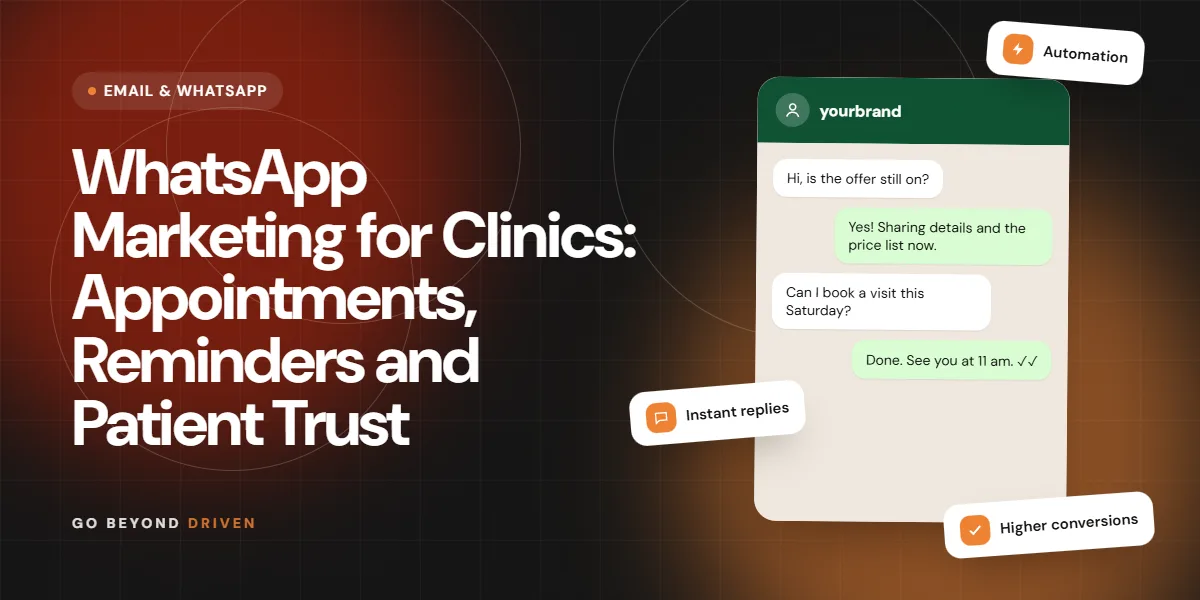
WhatsApp marketing for clinics means using WhatsApp to help patients find you, book appointments, receive reminders and stay in touch after treatment, while keeping their information private. Patients in India already use WhatsApp daily, so a clear business number is often the easiest way to ask a question or confirm a slot. Done well, it reduces missed calls, lowers no-shows and builds trust. Done carelessly, it can expose sensitive information or break advertising norms for medical practice. This guide shows what to set up, which messages to send, what to avoid and how to measure results for a general practice, dental clinic, skin clinic or specialist centre.
Why is WhatsApp useful for clinics and doctors?
Clinic reception desks are busy, and phones go unanswered during consultations. A patient who cannot reach you may simply call the next clinic on Google Maps. A WhatsApp number gives people a way to message at their convenience, and your team can reply between patients with a booking link, directions or fee information.
It also helps with routine communication that wastes front desk time: confirming appointments, sending prescriptions or reports when appropriate, sharing preparation instructions and collecting simple feedback. Patients tend to read these messages sooner than email, which improves attendance and follow-through on care.
How do patients start a WhatsApp chat with your clinic?
Add a WhatsApp button to your website, Google Business Profile, Instagram bio and clinic board, and print a QR code at reception and on prescription pads. A pre-filled message such as 'Hi, I would like to book an appointment' tells you the purpose and makes it easier for patients to begin. Our guide on Google Business Profile for Mumbai businesses shows how to feature the link.
Use a dedicated business number with the WhatsApp Business app or API, not a doctor's personal number. Set a greeting message, working hours and an away message so patients know when to expect a reply. For emergencies, state clearly that WhatsApp is not monitored for urgent care and give the clinic phone number and nearest hospital emergency line.
Places to show your clinic WhatsApp number:
Which WhatsApp messages should a clinic send?
Start with transactional messages that patients expect. These include appointment confirmation with date, time, doctor and address, a reminder the day before, a short note with parking or landmark guidance, and a rescheduling option. After a visit, send a thank you and aftercare instructions that your doctor has approved.
For ongoing care, schedule follow-up reminders such as a dental check-up after six months, vaccination dates for children, annual health check packages or repeat visits for chronic conditions. Keep messages respectful and relevant. A seasonal note before the monsoon about dengue or allergy care can be helpful when it is informative and not alarmist.
How can WhatsApp reduce missed appointments?
No-shows usually happen because people forget, find the timing inconvenient or cannot reach the clinic to change the slot. A reminder 24 hours before with simple buttons such as Confirm or Reschedule solves much of this. A second reminder a few hours before helps for early morning slots, and sharing the map pin reduces late arrivals.
When a patient cancels, offer the next available slot immediately instead of ending the chat. Keep a short waiting list so a freed slot can be offered to someone else. Track confirmed versus attended appointments for a few weeks to see the improvement, and adjust timing if reminders are being missed.
FAQs: How can WhatsApp reduce missed appointments?
Is it fine to send reminders without consent?
Get consent when the patient registers, for example on the intake form, and state the type of messages they will receive. Give an easy way to opt out.
Can the receptionist handle all chats?
Often yes for bookings and basic questions, with clear scripts. Medical questions should be routed to the doctor or a trained staff member.
What are the privacy and advertising rules to respect?
Health information is sensitive. Do not share diagnoses, test results or photographs in group chats or broadcast lists, and confirm identity before sending reports. Use patient names carefully, store consent, and restrict who can see the chats. India's data protection framework and your professional body's guidance apply, so confirm requirements with a qualified adviser.
Medical advertising in India is also regulated. Doctors should follow the code of conduct of the relevant medical council, which limits solicitation and certain claims. Avoid promising cures, quoting guaranteed outcomes or sharing patient testimonials in ways your council does not allow. When in doubt, inform and educate rather than advertise.
How can a chatbot help a clinic?
A basic chatbot can answer repeated questions about timings, location, fees, accepted payment methods and insurance, collect the patient's name, concern and preferred slot, and pass the details to the receptionist. It can work outside clinic hours, so a late-evening enquiry is not left unanswered until morning.
Keep the bot simple and honest. It should never give medical advice or diagnose, and it should hand over to a human for anything clinical. Our article on the WhatsApp chatbot for business explains how to design flows, and our guide to digital marketing for clinics and hospitals shows where WhatsApp fits in your wider plan.
What should a clinic WhatsApp setup checklist include?
Begin with the basics: a verified business profile with the clinic name, address, hours, specialities and website; a greeting and away message; and labels such as New patient, Booked, Follow-up and Billing. Decide who answers, during which hours, and who backs them up when the receptionist is on leave.
Write quick replies for the questions you hear daily, such as consultation fee, parking, first visit documents, insurance and cashless support. Prepare approved templates for confirmation, reminder and follow-up messages, and agree on a sensible limit for how many messages a patient receives each month.
Finally, run a one-week trial with a small group of patients. Ask staff what slowed them down, ask patients what felt helpful or intrusive, and refine before you promote the number widely on your board, website, prescription pads and Google listing.
Clinic WhatsApp setup checklist:
How do you use WhatsApp for reviews and referrals?
A few days after a visit, send a polite message thanking the patient and asking for feedback privately first. If they are happy, share your Google review link and explain that honest reviews help others find care. Never offer rewards for positive reviews, and never pressure patients. See our guide to getting more Google reviews for tested wording.
Respond to concerns quietly and professionally in the chat, and offer a call from the doctor if needed. For referrals, a simple note such as 'If a family member needs a check-up, you can share this number' is enough. Avoid incentive schemes that could breach professional codes.
How does WhatsApp differ for dental, skin and general clinics?
The core flows are similar, but the rhythm differs by speciality. A dental clinic can build around six-monthly check-up reminders, aligner or braces appointment schedules and aftercare notes. A skin or aesthetic clinic often deals with multi-session treatments, so reminders for the next session and sensible aftercare guidance matter more. A general practice relies on quick booking, vaccination reminders and chronic care follow-ups.
Pricing questions come up often in cosmetic and dental work. Share a consultation fee clearly, explain that treatment costs depend on examination, and invite the patient to book rather than quoting treatment prices over chat. This is honest, protects the patient from misleading estimates and fits the code of conduct that most doctors follow.
How do clinics in Mumbai measure WhatsApp success?
Measure the number of chats started, the share that convert into bookings, the response time, attendance for booked slots, and the number of new Google reviews linked to WhatsApp requests. Compare chats by source, whether Google Maps, ads or the clinic board, so you can see which promotion brings real patients.
Review a sample of conversations monthly for tone and accuracy. Are replies quick and kind? Are common questions answered clearly? Update your quick replies, add missing information to your website and train the team on what to escalate. Small refinements make the channel feel caring, not mechanical.
Final thoughts
WhatsApp suits clinics because it fits how patients already communicate, but trust is everything in healthcare. Keep messages useful and private, get consent, and keep a human behind the chat. If you want help setting up a compliant WhatsApp flow for your practice, book a free marketing audit with Go Beyond Driven, call +91 91378 79539 or email gobeyonddriven@gmail.com.