
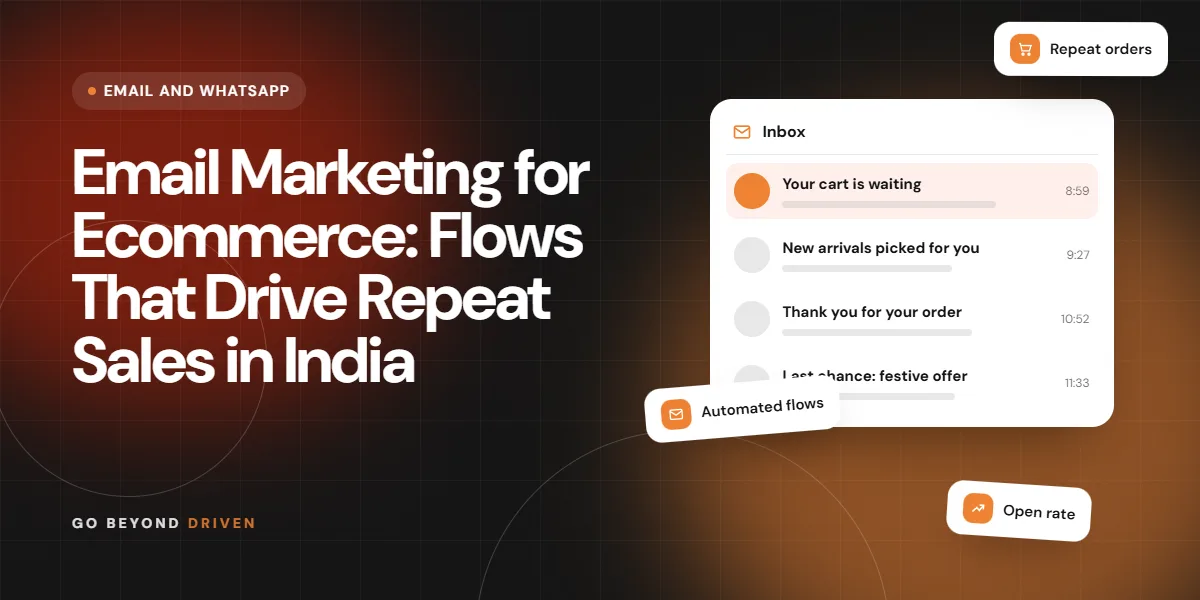
Email marketing for ecommerce is still one of the highest-return channels an Indian online store can own, because you are not paying for every visit. The catch is that most of the money comes from automated flows, not from the occasional newsletter. This guide covers the flows every ecommerce brand in India should set up first: welcome series, browse and cart abandonment, post-purchase, replenishment and win-back. It also covers festive campaigns, list growth, the deliverability rules set by Gmail and Yahoo, and the metrics worth tracking now that open rates are unreliable. If you run a Shopify or WooCommerce store and send fewer than five automated emails today, start with the first three flows below. They usually pay for the rest.
Why does email still matter for Indian ecommerce brands?
Paid acquisition keeps getting more expensive. Every rupee spent on Meta or Google buys a visit, and most visitors leave without buying. Email lets you keep talking to the people you already paid to bring in, at a cost per message that is a tiny fraction of an ad click. For D2C brands in fashion, beauty, food and home, a well-run email programme often becomes a meaningful share of monthly revenue, most of it from repeat customers who already trust the brand.
Indian shoppers do use email, even if they reply faster on WhatsApp. Order confirmations, invoices and delivery updates all arrive in the inbox, so customers check it around purchase time. Email also gives you room that WhatsApp does not: longer stories, product guides, several products in one message and rich visuals, at a much lower cost per send. The smartest stores use both, with WhatsApp for urgent and personal messages and email for depth and frequency. We cover the WhatsApp side in our WhatsApp business marketing guide.
Which email flows should an ecommerce store set up first?
Flows are automated emails triggered by what a customer does, such as signing up, browsing, abandoning a cart or buying. They run every day without anyone pressing send, and because they arrive at the moment of interest, they convert far better than broadcast campaigns. Build them in roughly this order: welcome series, abandoned cart, abandoned checkout, browse abandonment, post-purchase, replenishment or cross-sell, and finally win-back. The first three usually recover the most revenue for the least effort.
Platforms such as Klaviyo, Omnisend, Mailchimp, Shopify Email and Zoho Campaigns all support these flows. Choose one that connects natively to your store so product data, order history and coupon codes sync automatically. If you are still choosing a store platform, our ecommerce website development guide covers which builds make email and tracking easier. Start simple: three well-written flows that run reliably beat ten half-built ones that nobody checks after launch.
Core ecommerce flows:
What should a welcome email series include?
The welcome series goes to new subscribers who have not bought yet, and it usually earns the highest engagement of anything you send. Plan three to five emails across about ten days. Email one arrives instantly and delivers whatever you promised at signup, such as a first-order code. Email two tells your brand story: who started it, how products are made and why you are different. Email three shows best sellers with real reviews. Email four answers objections around sizing, delivery time, returns and cash on delivery. Email five is a gentle reminder that the code is about to expire.
Keep each email focused on one job and one main button. Use real photos rather than heavy graphics, because many Indian shoppers read on mid-range Android phones over mobile data. Write subject lines that sound like a person, not a banner ad. If someone buys during the series, exit them immediately and move them into the post-purchase flow, so they never receive a discount email for something they just paid full price for. That single rule prevents a surprising number of annoyed customers.
How do abandoned cart and browse abandonment emails work?
Abandoned cart emails go to shoppers who added items but did not check out. Send the first one within an hour, showing the exact products with images and a clear link back to the cart. The second goes about a day later and handles hesitation: reviews, return policy, delivery timelines and payment options including UPI and cash on delivery. A third, two or three days later, can include a small incentive if your margins allow. Many stores give a discount in the very first email, which quietly trains customers to abandon carts on purpose.
Browse abandonment targets people who viewed products, often more than once, without adding to cart. These emails should feel helpful rather than watchful. A line like 'Still deciding? Here is what customers say about it' works better than 'We saw you looking'. Include similar products in case the first one was not quite right. Browse emails need the shopper to be identified, which usually means they are already a subscriber or past customer, so list growth and these flows work together.
FAQs: How do abandoned cart and browse abandonment emails work?
How many abandoned cart emails should I send?
Two or three is typical: the first within an hour, the second around 24 hours later, and an optional third with an incentive. Stop the sequence the moment the customer completes the order.
Should abandoned cart emails include a discount?
Not in the first email, because many shoppers return without one. Test a small incentive in the last email of the sequence and keep it modest so customers do not learn to wait.
What should post-purchase emails do?
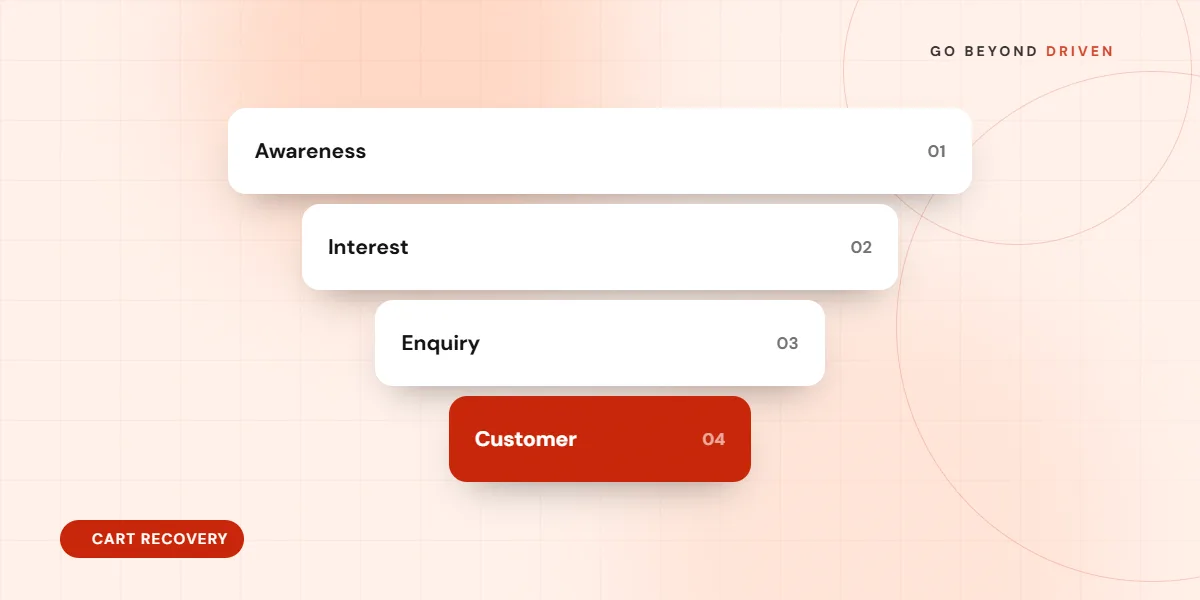
Post-purchase emails reduce anxiety, cut support tickets and set up the second order, which is where ecommerce profit usually lives. Start with a clear order confirmation, then a shipping email with a tracking link from your courier partner. For cash on delivery orders, add a confirmation step and a reminder to keep cash or UPI ready at delivery, because failed COD deliveries and returns to origin quietly eat into margins for Indian stores.
After delivery, send a how-to-use or care guide, then ask for a review about a week later, once the customer has actually used the product. Photo reviews are especially valuable for fashion, beauty and home products. A few weeks after that, recommend items that genuinely go with what they bought: a serum with a moisturiser, a kurta with a dupatta, a coffee grinder with a bag of beans. Recommendations based on purchase history consistently beat a generic best sellers block.
How do replenishment and win-back flows bring customers back?
Replenishment flows suit consumables such as skincare, supplements, coffee, pet food and cleaning products. Work out how long one unit typically lasts, then send a reminder just before the customer runs out, with a one-click link to reorder. If a 30 day pack is the norm, remind at around day 24. These emails feel like a service rather than marketing, and they often have the highest click rates in the whole programme.
Win-back flows go to customers who have not bought for a while, usually two to three times your average gap between orders. Start with a simple 'We miss you' email showing new arrivals, follow with a stronger reason to return, and finish with a clear choice to stay subscribed or leave. People who do not respond after the full sequence should move to a lower-frequency segment or be suppressed, because keeping unengaged addresses on your main list damages deliverability for everyone else.
How should you plan festive and sale campaigns?
Flows handle everyday revenue, while campaigns handle the big moments. In India these include the Navratri and Diwali season, end of season sales, Valentine's Day, Raksha Bandhan, Independence Day sales and the year-end period, plus category moments like the wedding season for jewellery and ethnic wear. Plan these four to six weeks ahead, with a teaser, an early access email for subscribers, the main launch, a reminder and a last chance email.
Increase sending gradually before a big sale rather than jumping from one email a month to one a day, because sudden spikes in volume can hurt inbox placement. Segment by engagement so your most active subscribers get the most emails and dormant ones receive only the main launch. Sync the email calendar with your ads and WhatsApp so customers see one consistent offer. For more ideas, see our festive season marketing ideas. Between festivals, a fortnightly newsletter with useful content, new arrivals and customer stories keeps the list warm.
How do you grow an email list for an Indian online store?
Most list growth comes from your own website traffic. A well-timed popup that offers a first-order discount, free shipping or early access usually captures a small but steady share of visitors. Show it after a few seconds or on exit intent, not the instant the page loads, and make it easy to close on mobile. Add an email field at checkout with a clear, unticked consent box, and collect email addresses from WhatsApp and Instagram enquiries as well.
Paid social can feed the list too. Lead ads or landing pages that promise a quiz result, a style guide or a launch alert build a list of interested people before they buy, which works well for new D2C brands. Our guide to performance marketing for D2C brands explains how to connect ads and email so each new subscriber costs less over time. Never buy or scrape lists. They destroy deliverability and break both platform rules and data protection expectations.
How do you make sure your emails land in the inbox?
Deliverability is the quiet part of ecommerce email that decides whether everything else works. Since 2024, Gmail and Yahoo have required bulk senders to authenticate their domain with SPF, DKIM and DMARC, offer one-click unsubscribe, and keep spam complaint rates very low, with Google pointing to a ceiling of 0.3 percent. Send from your own domain, such as hello@yourbrand.in, rather than a free Gmail address, and ask your developer or email platform to set up the DNS records properly.
Then protect your sender reputation over time. Remove hard bounces automatically. Suppress people who have not opened or clicked in several months, after sending them one re-engagement email. Avoid image-only emails, link shorteners and subject lines in full capitals. If you are switching platforms or starting fresh, warm up the new sending domain by emailing your most engaged subscribers first and increasing volume over two to four weeks.
FAQs: How do you make sure your emails land in the inbox?
Why are my emails going to the Promotions tab?
Promotions is normal for marketing email and still gets read. Focus on staying out of spam by authenticating your domain, sending to engaged subscribers and keeping complaint rates low.
Do I need DMARC for a small store?
Yes, if you send marketing email in any real volume. Gmail and Yahoo expect bulk senders to have SPF, DKIM and DMARC, and authentication also protects your brand from spoofing.
Which email metrics actually matter for ecommerce?
Open rates became unreliable after Apple's Mail Privacy Protection began loading emails automatically for many users, so do not judge campaigns on opens alone. Focus on click rate, conversion rate, revenue per recipient, unsubscribes and spam complaints. For flows, track revenue per recipient for each flow and for each email inside it, so you can see where people drop off and which message needs rewriting first.
Look at the bigger picture every month. What share of total store revenue comes from email, and how much of that comes from flows versus campaigns? How many first-time buyers place a second order within 60 or 90 days? Those numbers show whether email is genuinely building customer lifetime value or simply discounting sales you would have made anyway. Add UTM parameters to every link so GA4 and your store reports agree on what email actually drove.
Email marketing mistakes ecommerce brands should avoid
The most expensive mistakes are structural. Sending only campaigns and no flows. Discounting in every email, so customers never buy at full price. Sending the same email to the entire list regardless of what people bought or how recently they engaged. Ignoring mobile layout when most Indian shoppers read on phones. Letting the list fill with dead addresses until deliverability collapses in the one week that matters most, the festive sale.
Smaller mistakes add up too. Forgetting to exclude recent buyers from abandoned cart emails. Using a no-reply address so customers cannot respond. Writing subject lines that promise one thing and deliver another. Never testing anything, not even subject lines or send times. Not checking that coupon codes inside flows still work after a sale ends. Review your flows every quarter with fresh eyes, as if you were a first-time customer, and fix whatever feels confusing or pushy.
Monthly email checklist:
Final thoughts
Email marketing for ecommerce rewards patience and structure more than clever subject lines. Get the core flows running, write them as if you were talking to one customer, keep your list clean and measure revenue rather than opens. Once that foundation is in place, festive campaigns and newsletters have a healthy audience to land with, and every rupee you spend on ads goes further because more first-time buyers come back on their own.
If you would like help building or fixing your flows, our email marketing agency team works with Indian ecommerce brands on strategy, copy, design and deliverability. The easiest place to start is a free marketing audit, where we review your store, email setup and ad funnel together and show you where revenue is slipping away. Meetings can happen in person in Mumbai or online, wherever your team is based.