


A social media strategy template is a short, fill-in document that answers the ten questions every social media plan needs: what you want to achieve, who you are talking to, what you stand for, what you will post, where, how often, how you will reply, how ads fit in, how you will measure success and when you will review it. The point is not a long deck. It is one or two pages that anyone on your team, or an agency, can read and act on. This guide gives you the ten blocks in order, explains what good answers look like for an Indian business, and ends with a filled-in example so you can see the template working before you write your own.
What is a social media strategy template and why use one?
A social media strategy template is a structured set of headings that turns vague intentions, such as 'we should post more', into specific decisions. It stops social media from being run on mood. When the owner, a junior marketer and a freelancer all work from the same page, the posts stay on message, the replies follow the same rules and results can be judged against an agreed goal.
It is different from a content calendar. The strategy decides why, who and what kind of content; the calendar decides which post goes out on which day. Fill in the strategy first, then build the calendar from it. Our content calendar template guide covers that second step, including columns, workflow and Indian festival planning.
What should you do before filling in the template?
Before filling in the template, look honestly at where you are now. List your accounts, follower counts, average reach, best and worst posts from the last three months, how quickly you reply to messages and what your ads have cost per enquiry. Without this baseline, any goal you set is a guess. A short social media audit gives you all of this in a couple of hours.
Also gather three inputs from outside the marketing team. Ask sales or the front desk what customers ask most before buying. Look at two or three competitors and note what they post and what gets real comments. And check your business calendar: launches, peak seasons such as Diwali or wedding season, slow months and any capacity limits, because there is no point driving enquiries your team cannot handle.
Blocks 1 and 2: what goal and audience should the strategy name?
Block 1 is one business goal for social media, with a number and a time frame, such as '40 qualified enquiries a month from Instagram and Facebook by March' or '200 trial signups this quarter'. Add two or three supporting goals if needed, such as reply time or review count, but keep one clear priority. Goals like 'brand awareness' or '10k followers' are fine as side notes, not as the headline.
Block 2 describes the audience in practical terms: who buys, where they live or work, what language they use online, what they worry about before buying and where they already spend time. 'Homeowners aged 30 to 50 in Powai, Chandivali and Thane, buying their first flat, worried about budget overruns and timelines' is usable. 'Everyone aged 18 to 65' is not, because it gives no direction for content or ads.
How do you define positioning and content pillars in the template?
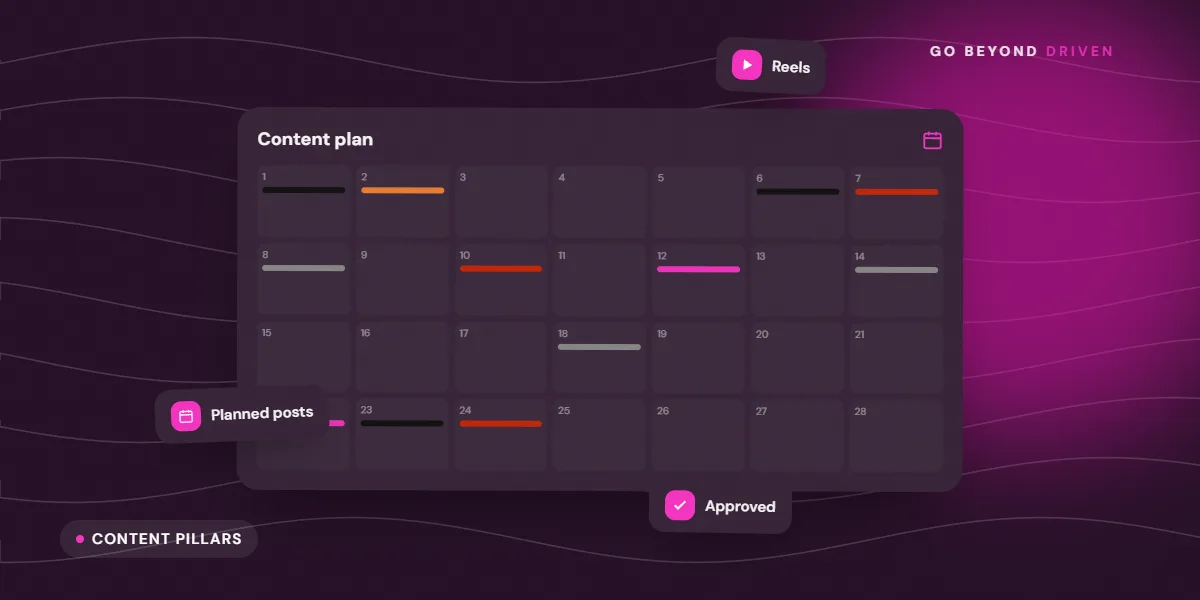
Block 3 is a single positioning line: what you offer, for whom and why you rather than the alternatives. It should be specific enough that a competitor could not copy it word for word. Block 4 lists three to five content pillars, the recurring themes that every post fits into. Pillars keep you from posting random content and make idea generation much easier each week.
Good pillars come straight from your audience's questions and your proof. For a service business they might be your work, customer questions, process and pricing transparency, people and reviews, and seasonal offers. Give each pillar a rough share of posts, such as 30 percent work, 25 percent questions, and so on, so one theme does not take over. For a long list of angles under each pillar, see our social media post ideas for business.
Example content pillars for a service business:
Which platforms, formats and posting rhythm belong in the template?
Block 5 lists each platform with its role, not just its name. For example: Instagram to show work and start DMs, Facebook to reach older homeowners and run ads, LinkedIn for developer and architect partnerships, WhatsApp Business to close. If a platform has no clear role, leave it out. Block 6 sets the format mix and cadence for each platform, such as two reels, one carousel and Stories on four days a week.
Be realistic about cadence. A pace you can keep for six months beats an ambitious one you abandon in three weeks. Note who creates each format and how: phone video shot by the site supervisor, carousels designed in Canva by the marketer, monthly professional shoot for portfolio photos. Writing the 'who' into the template is what turns a plan into something that actually happens.
How should the template handle replies and community management?
Block 7 sets the rules for replies, because comments and DMs are where social media turns into sales. Write down target reply times, for example within 30 minutes during business hours and by 10 am for overnight messages. Add saved replies for the five most common questions, the point at which a chat moves to WhatsApp or a call, and who owns the inbox on weekends and holidays.
Include a short section on negative comments and complaints: reply publicly once, calmly and quickly, then move the conversation to a private channel. Decide in advance what gets deleted, such as spam, abuse and personal data, and what never gets deleted, such as honest criticism. These rules matter most when the owner is busy and someone junior is holding the phone.
How should paid social fit into the strategy?
Block 8 covers paid social: monthly budget, the objective for each campaign and how ads support the organic plan. A common structure is an always-on campaign that promotes your best recent posts to a local or interest-based audience, plus short bursts around launches or seasons. Note the objective for each, such as messages, leads or website visits, because it decides what the platform optimises for.
Write down your target cost per enquiry or sale, even if it is a rough first estimate, and the point at which you would pause or scale. Include who can approve spend changes and how often ads are reviewed. Remember to plan for GST on top of ad spend. This block keeps budget decisions from being made on gut feel after one good or bad week.
Which KPIs and review rhythm should the template include?
Block 9 lists four to six KPIs that ladder up to the goal in Block 1, for example reach in your target area, profile visits, messages received, qualified enquiries, cost per enquiry and enquiries that became customers. Block 10 sets the review rhythm: a 15-minute weekly check on enquiries and replies, a monthly review of content and ads, and a quarterly look at whether the strategy itself needs to change.
Name the source for each number so nobody argues about data: Instagram Insights, Meta Ads Manager, your CRM or a simple enquiry sheet. Keep the review short and end it with one decision. Our guide to social media metrics to track explains which numbers matter and which are noise.
KPIs most small businesses should track:
FAQs: Which KPIs and review rhythm should the template include?
How long should a social media strategy be?
One to three pages is enough for most small and mid-sized businesses. If it is longer, people stop reading it and go back to posting on instinct.
How often should I update the strategy?
Review it every quarter, and update it sooner if your offer, audience or budget changes. Weekly and monthly reviews should adjust tactics, not the whole strategy.
Worked example: a filled-in template for an interior design studio in Powai
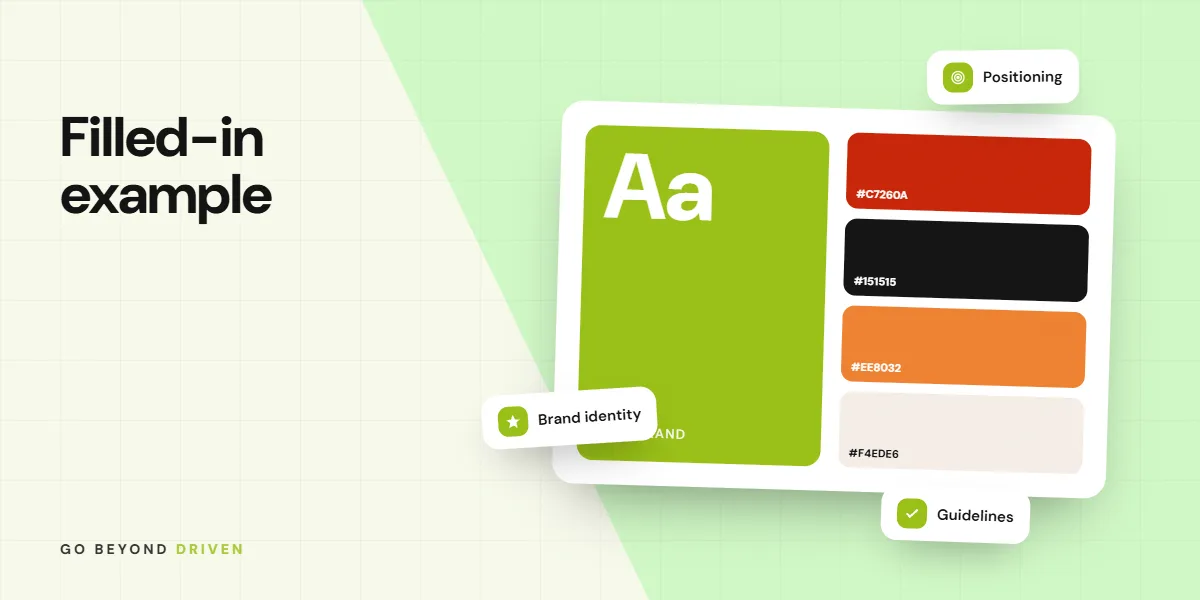
Here is a hypothetical example to show the template in use, not a real client. Goal: 30 qualified enquiries a month for full-home interiors above a set budget. Audience: first-time flat owners in Powai, Chandivali, Vikhroli and Thane, many in IT and finance roles, worried about cost overruns and delays. Positioning: 'Full-home interiors with a fixed timeline and itemised pricing.' Pillars: finished homes, budget breakdowns, site progress, client reviews, design tips for compact flats.
Platforms: Instagram for portfolio reels and DMs, Facebook for ads to homeowners, WhatsApp Business for closing. Cadence: two reels, one carousel, Stories four days a week. Replies: within 30 minutes on working days, site visit booked by call. Paid: an always-on Meta lead campaign within about eight kilometres, with a target cost per qualified enquiry the owner can afford given typical project margins. KPIs: enquiries, site visits booked and projects signed, reviewed weekly and monthly.
When does it make sense to get help building your strategy?
It makes sense to get help when you have filled in the template but are unsure your goal, positioning or budget is realistic, or when the plan is clear but nobody has time to execute it. A good agency should challenge your assumptions with data, help you sharpen the positioning line and pillars, and then show how the strategy turns into a monthly calendar, ads plan and report.
Go Beyond Driven builds social media strategies with Mumbai and Indian businesses using this same structure, then runs the content, ads and reporting, or hands the plan to your in-house team. Our social media marketing agency page explains how strategy, content and ads fit together in our work.
Final thoughts
A good social media strategy template fits on a couple of pages and answers ten questions clearly. Fill it in after a quick audit, review it every quarter and let the calendar and ads flow from it. If you would like a second opinion on your draft, Go Beyond Driven offers a free marketing audit, or call or WhatsApp +91 91378 79539.


