
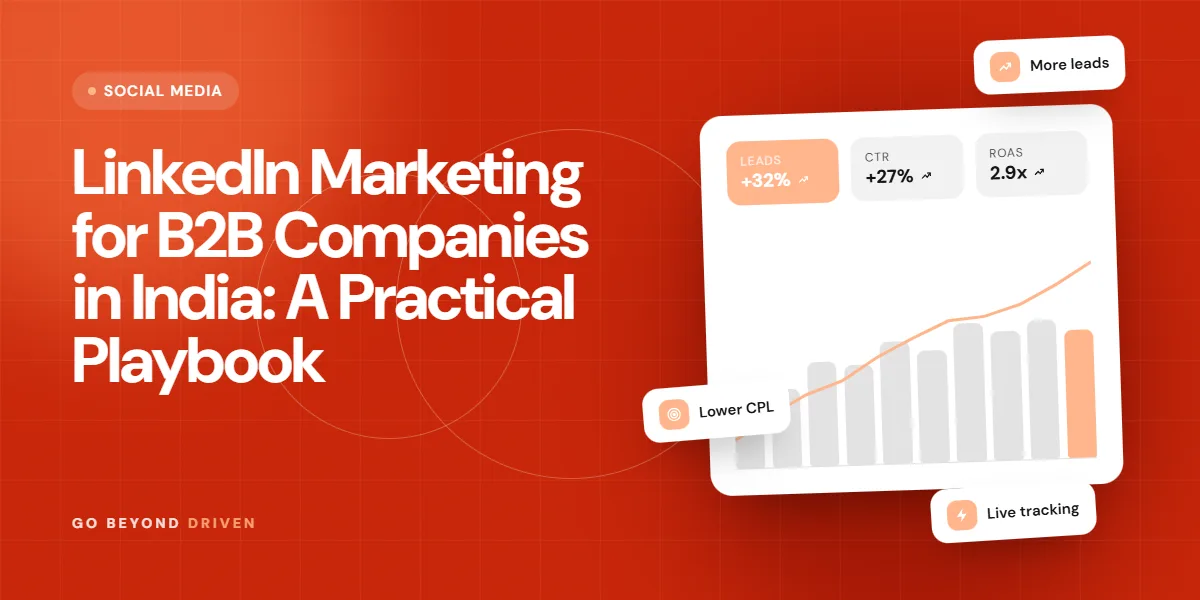
LinkedIn marketing for B2B companies in India works when you combine three things: an optimised company page, regular posts from founders and senior team members, and targeted LinkedIn Ads aimed at the exact job titles and companies you sell to. LinkedIn is where Indian decision makers in IT, manufacturing, BFSI, logistics, consulting and SaaS research vendors, check credibility and follow industry voices. It is slower and costlier than consumer platforms, but the audience quality is much higher. This playbook covers what to post, how often, how to run ads that bring qualified leads, how account-based targeting works and how to measure pipeline instead of likes.
Why Does LinkedIn Work So Well for B2B Companies in India?
India is one of LinkedIn's largest markets, with well over a hundred million members by the platform's own reporting. More importantly, those members tell LinkedIn exactly where they work, what they do and how senior they are. That makes it the only major social platform where you can reliably reach, say, procurement heads at manufacturing firms in Maharashtra or CFOs at mid-sized NBFCs. For a B2B company with a long sales cycle and a small universe of potential buyers, that precision is worth paying for.
LinkedIn also shapes trust. Before a buyer in BKC books a call with an IT services firm in Powai, they usually check the company page, the founder's profile and recent posts. A dormant page with five posts from two years ago raises doubts. An active page with useful insights, client stories and a visible team signals a serious, stable business. Even when the final deal comes through a referral or a tender, LinkedIn often decides whether you get shortlisted.
Company Page or Founder Profile: Where Should You Focus?
Both, but not equally. Company pages are essential for credibility, ads and hiring, yet organic reach for page posts is often modest. Personal profiles of founders, sales leaders and subject experts typically reach far more people, because LinkedIn's feed favours conversations between people. The most effective B2B companies treat the company page as the official home and use personal profiles as the main distribution engine for ideas, opinions and stories.
In practice, that means a founder posting two or three times a week about lessons, customer problems and industry shifts, while the company page shares case studies, product updates, events, hiring news and reshares of team posts. Senior employees can add their own perspective from their function. Our guide on founder personal branding on LinkedIn goes deeper into building a founder voice that feels authentic rather than manufactured, even when a writer helps shape the posts behind the scenes.
How Do You Set Up a Company Page That Converts?
Treat your company page like a landing page. The banner should say what you do and for whom in one line, not just show a stock skyline. The tagline and About section should name your industries, services and locations in plain language, because people search LinkedIn just like Google. Add your website link, a clear call-to-action button, the right industry and company size, and a Mumbai or India location so local buyers can find you. Use the Featured and product sections to showcase key offerings and case studies.
Then make the page feel alive. Ask employees to list the company correctly on their profiles so the people count reflects reality. Post consistently, reply to comments from the page, and pin your most useful post. Use LinkedIn's showcase pages only if you have very distinct business lines that serve different audiences. Most mid-sized Indian B2B firms are better served by one strong page than several thin ones that nobody maintains.
Company page checklist:
What Content Should B2B Companies Post on LinkedIn?
B2B buyers follow content that helps them do their job better or make a safer decision. Start with three or four pillars tied to your buyers' problems: practical how-to advice, industry trends and regulation changes, proof through case studies and client results, and the culture and people behind the company. A logistics firm might post about warehouse automation, GST e-way bill changes, a client success story and a day in the life of a fleet manager. Each post should leave the reader with one useful idea.
Formats matter. Document posts, which appear as swipeable PDF carousels, work well for frameworks and checklists. Short native videos of a founder explaining one idea build familiarity. Plain text posts with a strong first line still perform when they share a clear opinion or story. Polls can start conversations but should not be overused. Our B2B content marketing strategy guide explains how to turn one solid piece of thinking into a month of LinkedIn posts, blogs and emails.
Formats to rotate:
How Often Should You Post on LinkedIn?
For a company page, two to four posts a week is a sensible target for most B2B firms. For a founder or senior leader, two to three thoughtful posts a week is plenty, and quality matters far more than frequency. LinkedIn feeds move slower than Instagram, so a good post can keep earning views for a day or two. Spend time on the first two lines, since that is all most people see before clicking to read more. Reply to comments within the first hour, because early conversation helps a post travel further across the network.
FAQs: How Often Should You Post on LinkedIn?
What is the best time to post on LinkedIn in India?
Weekday mornings and lunch hours often work well for Indian professional audiences, but check your own analytics. Test different slots for a few weeks before settling on a schedule.
Should I use hashtags on LinkedIn?
Use a few relevant hashtags at most. They have limited impact on reach today. A strong opening line and genuine comments matter far more than a long list of tags.
Can I repurpose blog content for LinkedIn?
Yes. Turn key points from a blog into a text post, a document carousel or a short video. Add a link in the comments or at the end, and keep the post useful on its own.
LinkedIn Ads: Formats, Targeting and Budgets
LinkedIn Ads let you target by job title, function, seniority, industry, company size, company name, skills and location. That precision comes at a price: clicks on LinkedIn usually cost several times more than on Meta, so campaigns must be built for quality rather than volume. The main formats are sponsored single image and video posts, document ads that can gate a PDF behind a form, conversation and message ads sent to inboxes, and text or spotlight ads. Lead Gen Forms are often the best starting point, because they prefill the user's details and reduce friction.
Start narrow. A well-defined audience of a few tens of thousands of relevant professionals in your target industries usually beats a huge, loose audience. Offer something worth a form fill, such as an industry benchmark, a checklist, a webinar or a free assessment, rather than asking cold audiences to book a sales call. Our performance marketing team sets up LinkedIn campaigns with clear conversion tracking so you can see cost per qualified lead, not just cost per click.
How Does Account-Based Marketing Work on LinkedIn?
Account-based marketing, or ABM, flips the funnel. Instead of attracting anyone in a broad category, you start with a list of the specific companies you want to win and focus all your effort on them. LinkedIn supports this by letting you upload a company list as a matched audience and serve ads only to employees of those firms, filtered by function and seniority. You can also upload a contact list from your CRM to reach known prospects and exclude existing customers.
A simple ABM programme for an Indian B2B firm might target 200 named accounts with three stages of content: an awareness video from the founder, a case study relevant to their industry and an invitation to a roundtable or demo. Sales teams then follow up with the people who engaged, using that context to open a warmer conversation. ABM works especially well when deal sizes are large, buying committees are complex and the number of good-fit accounts is limited.
Social Selling Without Spamming Your Network
Social selling means your sales team uses LinkedIn to build relationships, not to blast pitches. The basics are a complete, credible profile, regular engagement with prospects' posts, personalised connection requests and helpful follow-ups. Tools like Sales Navigator help find decision makers, track account changes and save leads. What does not work is automation that sends hundreds of identical connection requests and long sales messages to strangers. Indian buyers receive plenty of those, and most are ignored or reported.
A better rhythm is to comment thoughtfully on a prospect's post, connect with a short note that references something specific, share a relevant resource a week later and only then suggest a conversation. It is slower, but reply rates and meeting quality are much higher. Combine this with your content and ads, so that by the time a salesperson reaches out, the prospect has already seen your company's ideas several times in their feed.
FAQs: Social Selling Without Spamming Your Network
Is LinkedIn automation safe to use?
Aggressive automation can breach LinkedIn's terms and risk account restrictions. It also damages your reputation. Use automation sparingly, if at all, and keep outreach personal and relevant.
Do I need Sales Navigator?
Not at the start. It becomes useful when your team prospects regularly and needs advanced search, lead lists and account alerts. Many firms trial it before committing to a paid plan.
How Do You Measure LinkedIn ROI?
Measure the journey, not just the post. Install the LinkedIn Insight Tag on your website to track conversions and build retargeting audiences. Connect Lead Gen Forms to your CRM so every lead is recorded with its source. Track cost per lead, but more importantly the share of leads that become qualified opportunities and, eventually, revenue. B2B cycles in India can run for months, so review pipeline influenced by LinkedIn each quarter rather than judging campaigns on week-one results. For organic content, follower growth among your target titles and inbound messages from relevant buyers are better signals than raw impressions.
LinkedIn metrics that matter:
LinkedIn Marketing Mistakes B2B Brands Make
The most common mistake is treating LinkedIn like a noticeboard: posting press releases, award photos and generic festive greetings with nothing for the reader. Another is relying only on the company page and ignoring the people who actually build reach. Many firms also launch ads with audiences that are far too broad, send cold traffic to a homepage instead of a focused landing page, or ask for a demo before offering any value. Others give up on ads after a few weeks because the cost per click looks high, without checking lead quality.
Finally, many teams never connect LinkedIn data to sales. Without CRM tracking, it is impossible to know which campaigns created real pipeline. Fixing these basics usually improves results more than any new format or trend. Audit your page, your founder profiles, your targeting and your tracking first, then increase investment once the system is working. A simple monthly review with sales, looking at which leads turned into meetings and which went cold, will tell you more about your LinkedIn performance than any dashboard of impressions and clicks.
Avoid these mistakes:
Final Thoughts
Done well, LinkedIn marketing for B2B firms builds trust long before a sales call and brings in leads that are worth the higher cost. Start with a strong company page, give your founder a consistent voice, run focused ads with a genuine offer and measure pipeline rather than impressions. If you want help, our social media marketing and content marketing teams work with B2B companies in Mumbai and across India. Book a free marketing audit, call +91 91378 79539 or email gobeyonddriven@gmail.com, and we will review your LinkedIn presence with you.