
LinkedIn ads for B2B lead generation let you show your offer to people by job title, seniority, industry and company size, instead of guessing from interests. That precision is why LinkedIn suits companies that sell to other businesses, such as software firms, manufacturers, consultancies, staffing agencies and financial services. It is also why clicks cost more than on most other platforms. This guide covers when LinkedIn is worth paying for, how to build an audience, which ad formats to start with, how lead gen forms work, and how to judge cost per lead against the value of a real customer.
When are LinkedIn ads worth it for B2B?
LinkedIn ads are worth it when a single customer is worth enough to absorb a high cost per lead and when you can name the kind of person who decides or influences the purchase. If one signed contract brings in lakhs of rupees, paying a premium for a precise audience can make sense. If your product sells for a few thousand rupees to small shops, Google Search or WhatsApp outreach will usually cost less per customer.
A quick test: can you write the job titles of your buyer on one line, for example 'Head of HR at companies with 200 to 1,000 employees in Mumbai and Pune'? If yes, LinkedIn can reach them directly. If your buyer is a general consumer or a tiny business owner without a clear title, the targeting advantage mostly disappears and the platform becomes an expensive way to reach them.
How do you target the right audience on LinkedIn?
Build the audience from facts about the buyer. Combine job function and seniority, such as Finance at Director level or above, with company size and industry, and limit location to the cities where you can actually serve customers. Job titles are the most direct signal but are also messy, since the same role has many names, so test a function and seniority combination against a title list.
Keep audiences large enough to deliver. LinkedIn recommends a minimum audience size, and very narrow lists make delivery slow and costs climb. Exclude your own employees, existing customers and competitors' staff where you can. Use matched audiences to upload a target account list or retarget website visitors, which is often the most cost-efficient way to follow up with people who already know you.
Audience filters worth testing:
Which LinkedIn ad format should you start with?
Sponsored Content in the feed is the usual starting point. Single image ads are simple to produce and test, document ads let you share a guide or checklist inside the feed, and video suits explaining a product in under a minute. Message ads, sent to the inbox, can work for event invitations but should be used sparingly because they feel intrusive when the offer is weak.
Match the format to the stage of the buyer. Cold audiences rarely fill a form for a 'Contact us' offer. Give them something useful first, such as a benchmark checklist, an ROI worksheet or a short webinar invitation. Then retarget people who engaged with a sales-focused ad. This two-step approach usually produces better leads than asking for a demo in the first ad.
How do LinkedIn lead gen forms work?
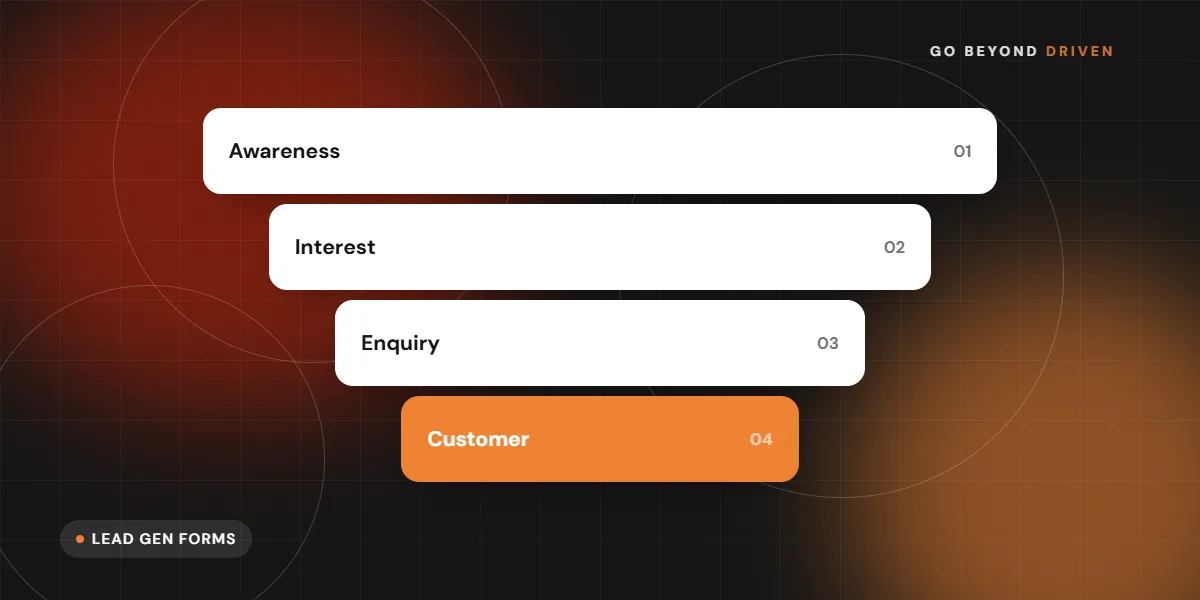
Lead gen forms open inside LinkedIn and pre-fill the person's name, work email, company and job title from their profile, so completing one takes a couple of taps. This reduces friction, especially on mobile, and usually gives a lower cost per lead than sending people to a website form. The trade-off is that the effort is so low that some leads are casual and less committed.
To protect quality, add one or two qualifying questions, such as company size or timeline, and use a clear promise on the form. Connect the form to your CRM or a spreadsheet so that leads are not sitting unseen in LinkedIn. Reply quickly, ideally within the same working day, and mention the resource they requested so the follow-up feels relevant. See our guide on lead nurturing strategies for what to do after the form.
FAQs: How do LinkedIn lead gen forms work?
Should I use lead gen forms or a landing page?
Forms give more leads at a lower cost, a landing page gives fewer but often better qualified ones. Test both on the same offer and compare cost per qualified lead, not cost per form.
Do lead gen forms need a privacy policy link?
Yes, LinkedIn requires a privacy policy URL on the form. Keep it short and honest about how you will contact the person.
How much do LinkedIn ads cost in India?
LinkedIn ads usually cost noticeably more per click than Google or Meta, because the audience targeting is richer and many advertisers compete for senior decision makers. Costs depend on audience, format and bid, so use LinkedIn's campaign planner as an estimate rather than a promise. Expect a cost per lead that is a multiple of what you might see on Meta for a consumer offer.
That is not a problem if the maths works. Divide your average deal value by your close rate to see what a lead is worth. If you close one in twenty leads and a deal brings Rs 5 lakh in revenue, a lead is worth roughly Rs 25,000 in revenue, which leaves room for a high cost per lead and still a sound return. Also plan for a minimum daily budget and GST on top.
What should your LinkedIn ad copy and offer say?
Lead with the problem a specific role has, not with your company history. 'Finance teams in Mumbai still reconciling invoices in spreadsheets?' will do more than 'We are a leading software provider'. Keep the introduction text short, use a headline that states the offer, and make the call to action match: 'Download the checklist' for a resource, 'Book a 20-minute walkthrough' for a demo.
Use proof that a business buyer cares about: a process, a named integration, a sample report or a short, true description of how you work. Do not invent numbers or customer names. Creative should look like it belongs in a professional feed: clear typography, a single idea per ad and a face or product screenshot where it helps. Rotate two or three variants and retire the weakest after enough impressions.
Offers that often suit B2B buyers:
How do you track and judge lead quality?
Cost per lead alone can mislead on LinkedIn. A cheap lead who never replies is worth less than an expensive one who takes a meeting. Record lead status in your CRM, such as contacted, meeting booked, proposal sent and won, and send those outcomes back where possible so you can compare campaigns by cost per meeting or cost per opportunity.
Install the LinkedIn Insight Tag so you can build retargeting audiences and attribute website conversions. B2B sales cycles are long, so give campaigns weeks, not days, before judging them, and look at the whole path including organic and direct visits later on. Our conversion tracking setup post covers how to set events up properly.
Should you pick LinkedIn ads or Google Ads for B2B?
They answer different questions. Google Search reaches people who are actively looking for a solution now, and costs are tied to a keyword. LinkedIn reaches the right people before they search, which suits products that need explaining or markets with low search volume. Many B2B firms use Google for demand that already exists and LinkedIn to create it among a named list of accounts.
If your budget is small, start with Google Search on your highest intent terms and add LinkedIn when you can fund at least a few weeks of steady spend. For the organic side, a consistent company page and thought leadership strengthen both; read our guide to LinkedIn marketing for B2B companies.
Final thoughts
LinkedIn ads work best for B2B companies with a clear buyer profile, a valuable offer and a sales process that follows up quickly. Start with a focused audience, one or two formats, a useful lead magnet and honest tracking of lead quality. If you want help judging whether LinkedIn fits your deal size, book a free marketing audit with Go Beyond Driven, or read about our LinkedIn marketing agency in Mumbai services.