
Google Ads vs Meta Ads is one of the first questions Indian business owners ask before they spend on paid marketing. The short answer is this: Google Ads works best when people are already searching for what you sell, and Meta Ads works best when you need to create demand among people who are not searching yet. A pest control company in Thane or a CA firm in Andheri usually wins on Google first. A new skincare label or a restaurant launch usually wins on Instagram and Facebook first. Most growing businesses end up using both in a planned ratio. This guide explains how each platform works, what drives cost, which industries suit which, and how to split a budget without wasting it.
What is the core difference between Google Ads and Meta Ads?
The difference comes down to intent. On Google, a person types a need into a search box: 'interior designer in Powai', 'best laptop under 60000', 'emergency dentist near me'. Your ad answers a question they have already asked. On Meta, which covers Facebook, Instagram, Messenger and the Audience Network, nobody is searching. People are scrolling Reels, checking stories and catching up with friends. Your ad interrupts that scroll and has to earn attention with a strong visual, a hook and an offer.
This one difference shapes everything else: the kind of creative you need, the cost of a click, the quality of a lead and the time it takes to see results. Google is a demand capture channel. Meta is a demand creation channel that can also capture demand once people know you. Neither is better in general. Each is better for a specific job, and the right choice depends on whether your customers already know they need you.
How Google Ads works and when it performs best
Google Ads is an auction. You choose keywords, write ads, set a bid strategy and a daily budget. When someone searches, Google ranks eligible ads using your bid, the expected click-through rate, ad relevance and landing page experience. Beyond Search, the same account runs Performance Max, Display, YouTube, Shopping and Demand Gen campaigns, but for most service businesses the Search network is where the highest intent leads come from.
Google performs best when there is clear, existing search volume for your service or product. Think of categories where the buyer has a problem right now and wants a solution fast: repairs, medical appointments, legal help, coaching admissions, B2B software, packers and movers, and local services. It also suits high-ticket purchases where people compare options on Google before calling. If nobody searches for what you sell because the category is new, Google alone will struggle to give you scale.
Google Ads tends to work well for:
How Meta Ads works and when it performs best
Meta Ads targets people, not searches. You define an audience using location, age, interests and behaviours, or you let Meta's Advantage+ audience find buyers based on your pixel and conversion data. You then show them image, video, carousel or collection ads in Feeds, Stories and Reels. The campaign objective you pick, such as leads, sales, traffic or messages, tells the algorithm whom to look for inside that audience.
Meta performs best for visual, emotional or impulse driven categories: fashion, beauty, food, home decor, events, real estate launches, fitness studios and D2C products. It is also strong for anything with a clear offer that a person did not know they wanted until they saw it. Because Meta's reach in India is very large and costs per thousand impressions are often lower than on Search, it is the go-to channel for building awareness in a city and then retargeting the people who engaged.
Where do YouTube, Performance Max and Advantage+ fit in?
The line between search and social has blurred. Google now runs YouTube, Discover and Gmail placements through Demand Gen and Performance Max campaigns, which behave more like social ads because they reach people who are not searching. Meta's Advantage+ campaigns automate audience, placement and creative choices in a way that resembles Google's automation. So the real comparison is not only Google versus Meta, but intent based campaigns versus discovery based campaigns, wherever they run.
For a business owner, the practical takeaway is simple. Keep at least one campaign that captures existing intent, usually Google Search, and one that builds new demand, usually Meta or YouTube. Automated campaign types work well once you feed them clean conversion data and good creative, but they can hide where money is going. Review placement and search term reports regularly so automation does not quietly spend on low quality inventory.
Which platform costs less: Google or Meta?
On a per click basis, Meta is usually cheaper. Clicks on Instagram and Facebook in India can often cost a fraction of what competitive Google keywords cost, especially in finance, real estate, education and healthcare where Search bids are high. But cost per click is the wrong number to compare. What matters is cost per qualified lead and cost per sale. A Google lead from someone who searched 'home loan balance transfer' may cost more but convert far better than a cheap form fill from a scroller.
The honest comparison is to run both with proper tracking for a few weeks and compare cost per sales qualified lead, not cost per form. In many service categories, Google leads cost more upfront and close faster. Meta leads cost less upfront and need stronger follow-up on call and WhatsApp. For a deeper look at bids and budgets, read our guide on what Google Ads costs in India.
FAQs: Which platform costs less: Google or Meta?
Is Meta always cheaper than Google?
Meta clicks and impressions are usually cheaper, but cheaper traffic is not always cheaper sales. Compare cost per qualified lead or cost per order across both platforms before deciding.
What is a good starting budget to test both?
Many small businesses start with a modest daily budget on each platform for four to six weeks. The exact number depends on your category, city and how many leads you need to judge quality.
Why are my Google clicks so expensive?
Competitive keywords, broad match without negatives, low Quality Score and weak landing pages all push costs up. Tighter keywords and better pages usually bring cost per click down over time.
Which businesses should start with Google Ads?
Start with Google if people already search for your service with clear words. A dermatology clinic in Bandra, a CBSE tuition centre in Borivali, a commercial cleaning company serving BKC offices or a CNC machine supplier in Bhiwandi all have buyers who type exact needs into Google. Here, showing up at the moment of search is the most efficient spend you can make. Pair your Search campaigns with a strong Google Business Profile and a call extension so mobile users can tap to call.
Google is also the safer first step for B2B businesses with a longer sales cycle. Decision makers research on Search, compare vendors and download brochures. Tight keyword lists, exact and phrase match, and a dedicated landing page per service will give you cleaner data than a broad social campaign. If you run a local service business across Mumbai, see how our performance marketing team in Andheri structures location based campaigns.
Which businesses should start with Meta Ads?
Start with Meta if your product sells through visuals, emotion or a fresh offer. A café opening in Lower Parel, a jewellery brand launching a festive collection, a real estate project in Thane announcing pre-launch prices or a gym offering a trial week all do well on Instagram and Facebook. These buyers are not searching yet, so you need to put the offer in front of them and give them a quick way to act, such as a lead form or a WhatsApp chat.
Meta is also the better first step when your category has little search volume. If you sell a new kind of product, such as plant based protein snacks or a niche home gadget, very few people know to search for it. Video ads that show the product in use, creator style content and testimonials will build the awareness that later turns into branded searches on Google. That is why D2C brands often begin on Meta and add Google once branded and category searches start to grow.
How should you split budget between Google and Meta?
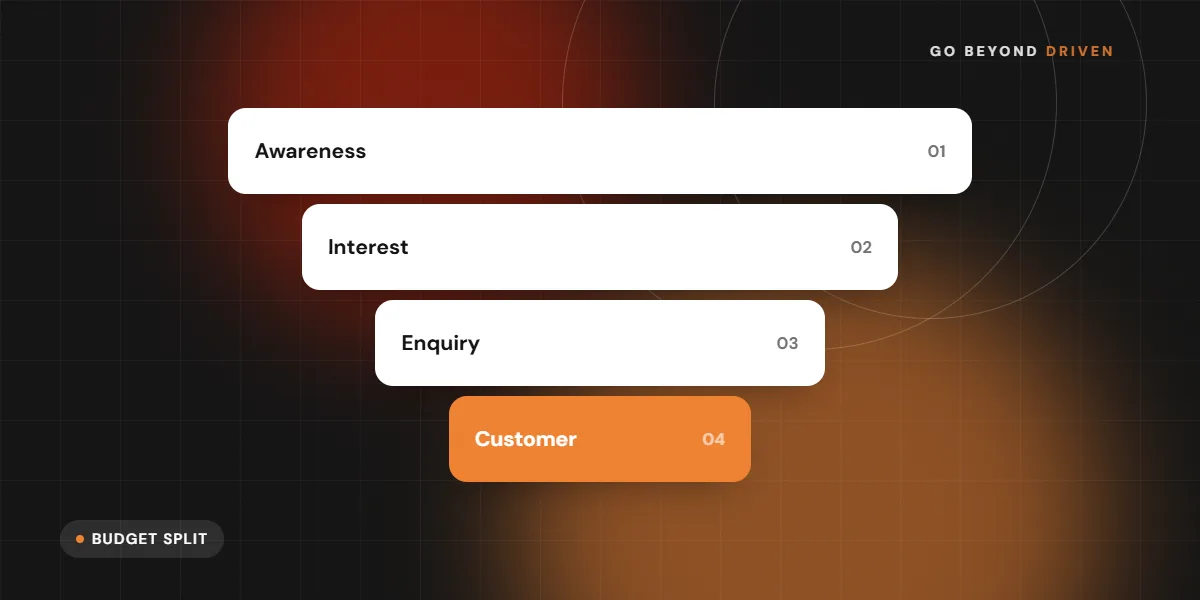
There is no universal ratio, but a sensible starting point depends on intent. For a local service business with strong search demand, a split weighted towards Google, with a smaller share on Meta for retargeting and awareness, is common. For a D2C or lifestyle brand, the reverse often makes sense: most budget on Meta to create demand, with Google covering branded search, Shopping and Performance Max. Real estate developers frequently run both heavily because buyers search and scroll during a long decision.
Treat your first split as a hypothesis. Run it for four to six weeks, measure cost per qualified lead or cost per purchase on each platform, then move money towards whichever delivers better business results. Revisit the split every month and during festive seasons, when costs and buyer behaviour shift. If you want a team to manage both channels together, our performance marketing agency plans Google and Meta as one connected system rather than two separate accounts.
FAQs: How should you split budget between Google and Meta?
Should I run both platforms from day one?
If budget is tight, start with the platform that matches your buyer's intent and add the second once you have tracking, landing pages and a clear cost per lead benchmark.
Can Meta support my Google campaigns?
Yes. Meta builds awareness that often increases branded searches on Google, and Meta retargeting can bring back visitors who clicked a Google ad but did not enquire.
How do you track and compare results fairly?
Comparison only works if tracking is set up correctly on both sides. Install the Google tag and connect GA4, set up conversion actions for form submits, calls and WhatsApp clicks, and import offline conversions from your CRM if possible. On Meta, install the pixel and the Conversions API so that browser restrictions do not hide your results. Use UTM parameters on every ad so GA4 shows a clean source and medium for each campaign. Our GA4 guide for small businesses covers the basic setup.
Then judge the platforms on the same metric. Each platform takes credit generously in its own dashboard, so a single sale may appear in both Google and Meta reports. Use your CRM or order system as the source of truth: how many leads became site visits, meetings or orders, and what each one cost. A simple weekly sheet with spend, leads, qualified leads and sales per platform will tell you more than any in-platform report.
Mistakes to avoid when choosing between Google Ads and Meta Ads
The most common mistake is judging a platform after one week and a tiny budget. Both systems need conversion data to learn, and early results are noisy. The second mistake is sending all traffic to the homepage. A dedicated landing page with one offer, one form and a clear phone and WhatsApp button usually lifts conversion on both channels. Our guide to landing page design best practices shows what to include.
Other mistakes we see often: running Meta lead forms without a call back process, using broad match on Google without negative keywords, copying the same creative to both platforms, and ignoring the time of day when your sales team can actually answer. Finally, many businesses compare cost per click rather than cost per sale, which almost always makes Meta look better and Google look worse than they really are.
Quick checklist before you launch:
Final thoughts
The Google Ads vs Meta Ads decision is not about picking a winner. It is about matching each platform to the job it does best: Google to capture people who are already looking, Meta to reach people who should be looking. Start with the channel that fits your buyer's intent, track results against real sales, and add the second channel when you are ready to scale. If you want an expert view of where your budget should go, book a free marketing audit with Go Beyond Driven, call +91 91378 79539 or email gobeyonddriven@gmail.com.