A digital marketing strategy is a written plan that explains what you want to achieve online, who you are targeting, which channels you will use, what you will say, how much you will spend and how you will measure success. It is different from a list of tactics. Posting on Instagram or running Google Ads is a tactic; deciding that you need 40 qualified enquiries a month from homeowners in the western suburbs, and choosing the channels most likely to deliver them, is strategy. This guide gives you a practical sequence to follow, from goals to a ninety day plan.
What is a digital marketing strategy and why do you need one?
A digital marketing strategy connects business goals to online actions. Without one, teams react to ideas and trends, spend money on whatever looks urgent and cannot explain what worked. With one, every channel has a job, every campaign has a target and every rupee has a reason.
It also protects you from distraction. New platforms, features and AI tools appear constantly. A strategy gives you a filter: does this help us reach our chosen audience or reach our goal? If not, you can ignore it without guilt. That clarity saves more money than most optimisation tricks.
How do you set goals for your digital marketing strategy?
Start with a business goal, such as more bookings, higher average order value, more repeat customers or entry into a new city. Translate it into a marketing goal with a number and a timeframe, such as 60 qualified enquiries per month within four months. Then work backwards: how many website visits, calls and messages would that need, at what conversion rates?
Keep goals few. Three is plenty. Choose a leading indicator you can influence, such as qualified leads, and a lagging indicator that matters, such as revenue. Avoid vague aims like increase brand awareness unless you define how you will measure it, for example through branded search growth or direct enquiries mentioning your name. Share the goals with everyone who touches marketing, including sales, so that the same definition of a qualified lead is used everywhere.
Goal types to choose from:
Who is your target audience and what do they need?
Describe your best customers specifically: age range, location, income level, job, problem, how they search, what worries them and what makes them trust a provider. Talk to your sales team and read your WhatsApp chats and reviews to find the exact words buyers use. A homeowner in Powai renovating a flat has different questions from a landlord in Dombivli.
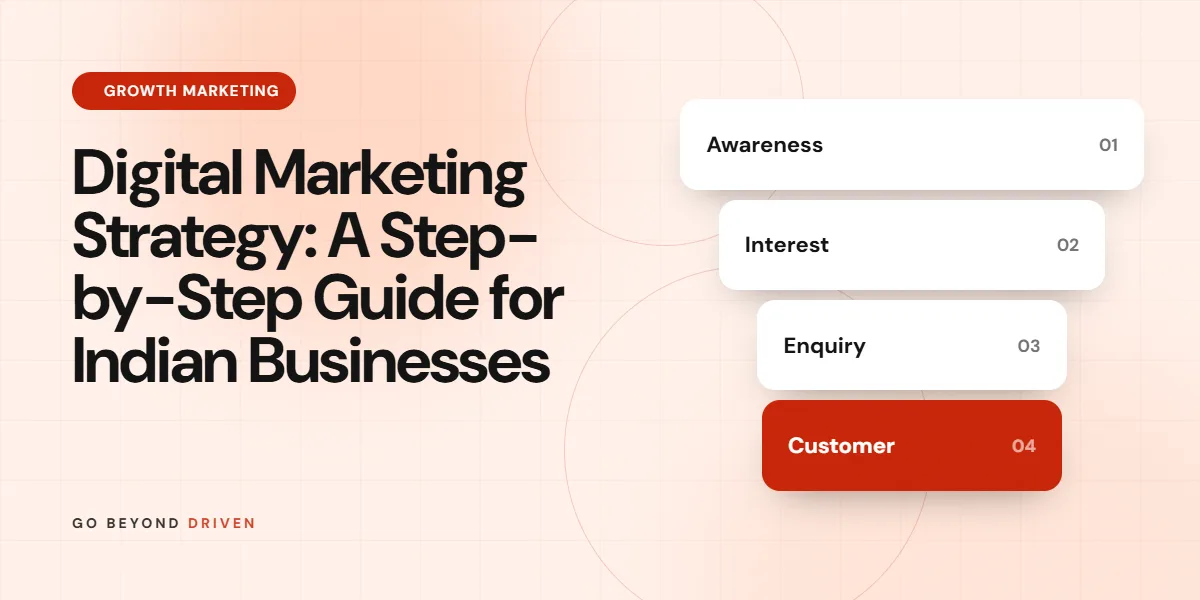
Map their journey from first awareness to purchase and beyond. At each stage, note what they ask and where they look. Early on they search general questions; later they compare options, check reviews and ask for quotes. Your content, ads and follow-up should answer the question at each step. Our marketing funnel guide explains the stages in more detail. Interview three recent customers if you can. Ask what made them search, who they compared you with, and what nearly stopped them from buying. Their answers are often more useful than any report.
How do you choose the right digital channels?
Match channels to intent and to the job in the journey. Search channels such as SEO and Google Ads capture existing demand. Social platforms create demand and build familiarity. Email and WhatsApp nurture people who already know you. Marketplaces and directories help with comparison. Few businesses need all of them at once.
Score each channel on three questions: do our buyers use it, can we produce what it needs consistently, and can we measure the result? Select two or three to begin. For help with paid options, see our overview of performance marketing, and our guide to Google Ads versus Meta Ads.
FAQs: How do you choose the right digital channels?
How many channels should a strategy include?
Two or three is a good start for most small and mid-sized businesses. Add a new channel only once existing ones are running smoothly and measured.
Is SEO or paid advertising better?
Neither is better in every case. Paid gives faster results while SEO compounds over time. Many businesses use both, with paid covering the gap while SEO grows.
What should your message and offer be?
A strategy fails if the message is weak. State plainly who you help, what you do, why you are different and what the next step is. Use proof you actually have: real project photos, reviews, certifications, years of experience and case studies. Avoid empty claims such as best quality or trusted by thousands unless you can support them.
Build offers around customer risk. A free site visit, a trial class, a consultation or a sample reduces hesitation. Test two or three variations rather than assuming. Keep the language consistent across your website, ads, social profiles and sales calls, so people do not feel they are dealing with different companies. See our brand voice guide for help. Test messages on a small audience first, such as a handful of existing customers, before you commit budget to them.
How do you build a content and campaign plan?
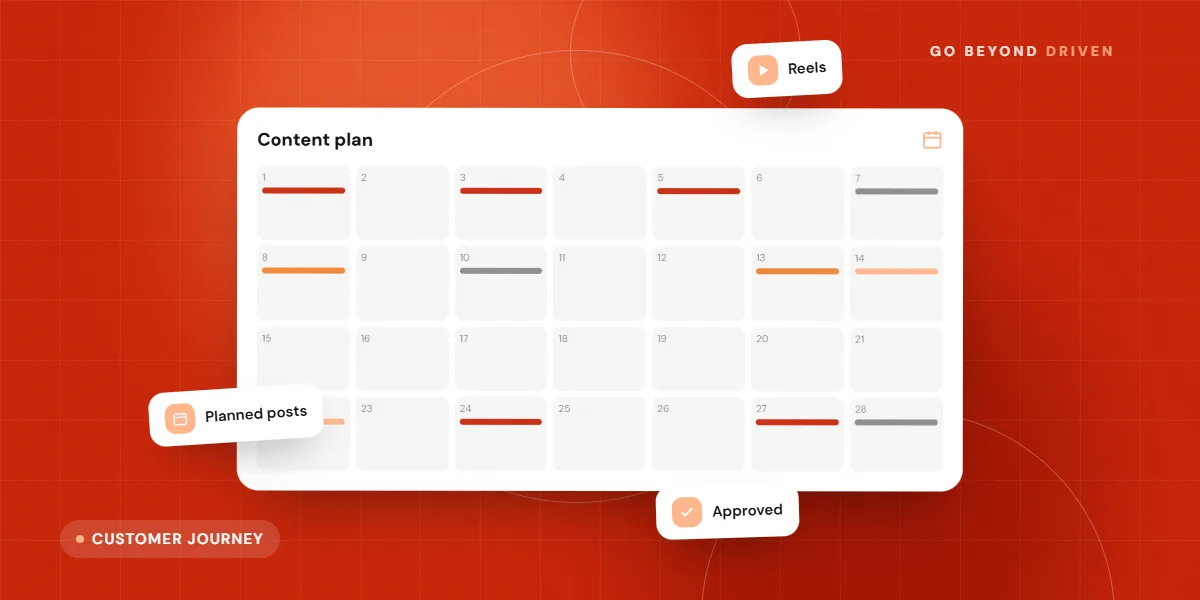
List the assets you need for each stage of the journey. Awareness might need short videos and helpful guides. Consideration needs comparison pages, case studies and FAQs. Decision needs strong landing pages, offers and quick follow-up. Retention needs onboarding messages, reviews and referrals.
Then assign calendar slots, owners and formats. Include festive and seasonal moments that matter in India, such as Diwali, Navratri, Ganeshotsav, wedding season or the start of the academic year. Build campaigns around them early, since competition and ad costs rise as dates approach. Keep a small buffer for reactive opportunities. Keep a simple asset tracker listing each piece, its stage, owner and publish date so that nothing stalls halfway.
Assets to map to each stage:
How should you set the digital marketing budget?
Base it on the goal, not on habit. Estimate the number of leads or sales you need, the likely conversion rates, and the cost to get a click or an impression on your chosen channels. Include creative production, tools, agency or freelancer fees and GST. Hold back a portion, perhaps a tenth to a fifth, for testing new ideas.
Plan to review spend monthly. Move money to channels that deliver cost-effective enquiries, trim those that do not, and avoid cutting too early. Some activities, such as SEO and email lists, take time to show returns. If you need a detailed method, our marketing budget guide shows how to build the numbers. Document your assumptions, such as expected conversion rates, so that you can see later which ones were wrong.
How do you measure and adjust the strategy?
Set up tracking before launch. Define conversion events such as calls, forms, WhatsApp clicks and purchases in GA4. Use UTM parameters on campaign links. Create a simple dashboard with the metrics tied to your goals, and a weekly rhythm of checks plus a monthly review. Keep notes on what you changed and why.
Treat results as information. If leads rise but quality falls, tighten targeting or screening. If traffic is good and conversions are poor, look at the landing page and offer. If a channel cannot be measured, treat its results with caution. Our guide on marketing attribution models explains how to read credit across channels. Assign one owner to each metric and agree on a short weekly check-in where the numbers are discussed along with the next action.
What does a practical 90-day plan look like?
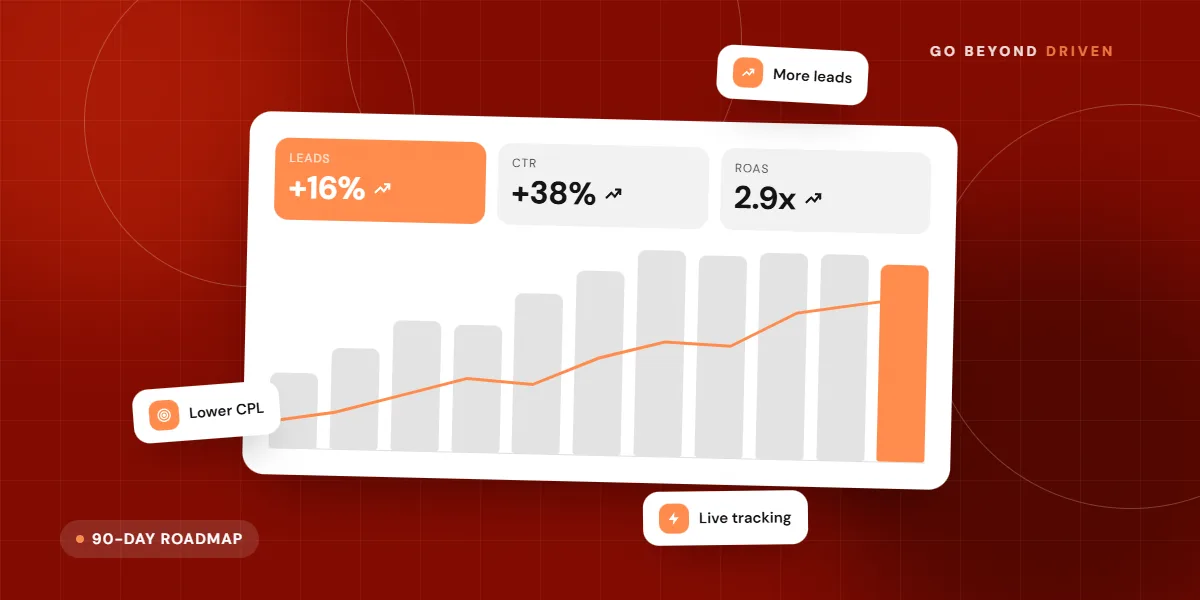
In the first thirty days, fix foundations: website, tracking, profiles, messaging and offers, and run small tests. In days thirty-one to sixty, launch the main channels with a controlled budget, publish the first set of content and gather early data. In days sixty-one to ninety, review, scale the winners, pause losers and refine audience and creative.
At the end of ninety days, hold a review: what did we learn, which numbers moved, what will we do next quarter? Write down the answers. Strategy is not a document you finish once; it is a plan you revisit every quarter as your market and business change.
Final thoughts
A good digital marketing strategy is simple enough to explain in a few minutes: this is our goal, this is our audience, these are our channels, this is our budget and this is how we will know. If you want a second pair of eyes on yours, book a free marketing audit with Go Beyond Driven, call +91 91378 79539 or email gobeyonddriven@gmail.com.