
Festive season marketing in India runs from roughly August to January, covering Ganeshotsav, Navratri and Dussehra, Diwali, the wedding season, Christmas and the year end. It is the biggest buying window of the year for most consumer brands and a key relationship building period for B2B companies, but it is also the most crowded and expensive time to advertise. The brands that win plan early, build audiences before costs rise, create offers that suit each festival and use WhatsApp and email to reach existing customers cheaply. This guide gives you a month by month planning calendar, practical ideas for each festival, advice on ad budgets and creative, and a checklist of mistakes to avoid, with examples for Mumbai and Indian businesses.
Why Does Festive Season Marketing Need a Plan, Not Just Posts?
During the festive months, customers are ready to spend on clothes, jewellery, electronics, home upgrades, gifts, sweets, travel, cars and property. Every brand knows this, so feeds and ad auctions fill up quickly. Ad costs on Meta and Google commonly rise in the weeks before Diwali as large advertisers increase budgets, which means late, unplanned campaigns often pay more for fewer results. A last minute "Happy Diwali" post does almost nothing for sales.
Planning lets you do the opposite. You can build your audience and retargeting pools in the cheaper weeks before the peak, prepare stock and creative in advance, line up influencer and partner collaborations, and schedule WhatsApp and email campaigns to your own customers, who are far cheaper to reach than strangers. It also gives your team breathing room to respond to what is working instead of scrambling to produce content every day during the busiest weeks of the year.
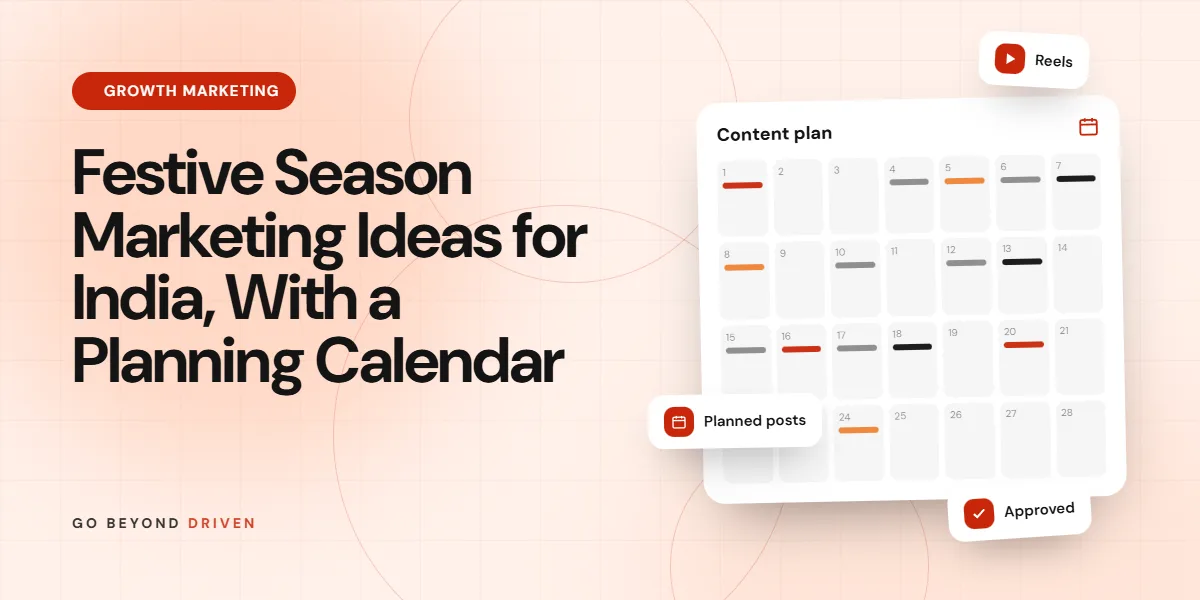
The Festive Marketing Planning Calendar: Month by Month
Festival dates follow the lunar calendar and shift every year, so check the exact dates for the coming year before you finalise plans. As a rough guide, use June and July for planning: set goals and budgets, decide on offers, brief designers, plan inventory and start growing your WhatsApp and email lists. August usually brings Independence Day, Raksha Bandhan and the build up to Ganeshotsav, which typically falls in August or September. Launch your first festive campaigns and start building video viewer and website visitor audiences.
September and October usually cover Ganeshotsav, Navratri and Dussehra. Run festival-specific campaigns, tease Diwali offers and send corporate gifting pitches by early October. Diwali typically falls in October or November, with Dhanteras just before it, so the two to three weeks before are your peak. From November to February, wedding season dominates, with peaks around auspicious dates. December brings Christmas and year end sales, and January brings Makar Sankranti, Republic Day sales and a chance to review the season.
Festive planning calendar at a glance:
Ganeshotsav Marketing Ideas
Ganeshotsav is especially big in Mumbai, Pune and across Maharashtra, with large public pandals from Lalbaug to the suburbs and many families welcoming the idol at home for one and a half to ten days. Relevant categories include sweets and modak, flowers and decoration, eco-friendly idols, ethnic wear, home cleaning and painting, electronics and quick home improvements. Content around easy decoration ideas, eco-friendly celebrations and family recipes tends to be shared widely.
Local businesses can benefit from neighbourhood targeting. A sweet shop in Dadar or Girgaon can run small radius ads for modak pre-orders and take orders on WhatsApp, a tactic our social media team for Dadar businesses uses often. A housing society in Thane might partner with local brands for a cultural evening. Be respectful in creative: avoid using deity images casually in discount ads, and focus on family, community, devotion and responsible celebration. Community engagement often builds more goodwill than heavy discount messaging during this festival.
FAQs: Ganeshotsav Marketing Ideas
Can B2B companies do anything for Ganeshotsav?
Yes. Simple greetings, team celebration posts and stories about eco-friendly practices help humanise the brand. Avoid hard selling, and focus on culture and community instead.
Is it safe to use religious imagery in ads?
Use it carefully and respectfully. Avoid placing deity images next to prices or discounts. Festive colours, diyas, flowers and family scenes are safer choices for promotional creative.

Navratri and Dussehra Marketing Ideas
Navratri brings nine nights of garba and dandiya, especially popular among Gujarati communities and widely celebrated across Mumbai, Thane and the western and eastern suburbs. Ethnic wear, jewellery, accessories, beauty and salon services, event venues, fitness classes offering garba workshops, and food delivery all see higher demand. Many people follow the tradition of a colour for each day, which makes a natural content series for fashion, beauty and lifestyle brands. A daily colour post or reel can drive consistent engagement through the nine days.
Dussehra, which follows Navratri, is traditionally considered an auspicious time to start new things and make major purchases such as vehicles, gold, electronics and property. Real estate developers, car dealers and jewellers often launch offers around this date. If you sell big ticket items, build interest during Navratri and push enquiries and site visits towards Dussehra. Developers can pair this timing with Meta lead ads aimed at buyers in specific micro-markets, followed by quick calls and site visit bookings.
Diwali Marketing Ideas That Actually Drive Sales
Diwali is the peak of the festive season for most categories. Gifting is central, so create gift guides by budget and recipient, curated hampers and gift cards. Dhanteras is a key day for gold, silver, utensils, electronics and vehicles. Offer pre-booking or early access for loyal customers a week or two ahead, so you capture sales before ad competition peaks. Bundles, free gift wrapping and guaranteed delivery dates often work better than deep discounts, protecting your margins while still giving customers a reason to buy.
Corporate gifting is a major opportunity for B2B suppliers, sweet shops, hamper brands and premium D2C companies. Many companies finalise orders in late September or early October, so pitch early with clear pricing tiers, customisation options and delivery commitments. For consumer brands, a Diwali WhatsApp catalogue and a simple order flow can handle high volumes without a complex website. Remember to plan post-Diwali messages too, such as thank you notes and offers for Bhai Dooj or the following weekend.
Diwali offer ideas that protect margins:
Wedding Season Marketing Ideas
The Indian wedding season usually runs from around November to February, with peaks around auspicious dates that families plan around well in advance. Categories that benefit include banquet halls, caterers, decorators, photographers, makeup artists, bridal wear, jewellery, invitations, travel and honeymoon packages, gifting and even home furnishings. Wedding decisions are made months ahead, so your awareness and lead generation campaigns should start well before the season itself.
Show real weddings and real results. Photographers and decorators should post behind the scenes reels and full event stories, while banquet halls should share walkthrough videos, seating layouts and menu options. Package pricing guides help couples and parents compare quickly. Our guide to digital marketing for banquet halls explains lead generation for venues in detail. Build referral partnerships between complementary vendors, such as a decorator and a caterer, to share leads and promote each other.
Year End and New Year Marketing Ideas
December combines Christmas, year end sales, party season and holiday travel. Cafes and restaurants can run Christmas menus and New Year's Eve bookings, retailers can clear stock with year end sales, and service businesses can offer packages that start in January. Travel, fitness, education and wellness brands should prepare for the New Year resolution wave in early January, when many people search for gyms, courses, diet plans and career upgrades.
Year end is also a strong time for B2B marketing. Companies are planning budgets for the next year, and a well timed case study, annual report style insights post or planning webinar can put you in front of decision makers. Send a thoughtful year end email to clients and partners summarising what you achieved together. In January, review your full festive season results, note what worked and what did not, and record lessons for the next year while they are still fresh.

How Should You Budget and Run Festive Ads?
Split your festive ad budget into three phases. In the build phase, four to eight weeks before the peak, spend on video views, engagement and traffic to build audiences cheaply. In the peak phase, shift most budget to conversion and lead campaigns, targeting warm audiences and lookalikes. In the post-peak phase, run retargeting and last chance offers. Our retargeting ads strategy guide explains how to set this up properly.
Prepare creative variations in advance, because ad fatigue sets in fast when frequency is high. Have at least three or four versions of each offer, in both static and video formats, ready before the peak. Set clear daily budgets and monitor cost per result daily during the busiest weeks. For local businesses, click to WhatsApp ads often convert well during festivals, because customers want quick answers about stock, prices and delivery. Our performance marketing team manages festive campaigns end to end.
FAQs: How Should You Budget and Run Festive Ads?
When should we start festive ads?
Start building audiences four to eight weeks before your key festival. Begin conversion campaigns two to three weeks before the peak, when buying intent rises.
Why do ad costs rise before Diwali?
Many large brands increase budgets at the same time, which raises competition in ad auctions. Building audiences earlier and using your own WhatsApp and email lists helps offset the higher costs.
Is it better to run discounts or bundles?
Bundles and value adds often protect margins better than deep discounts. Test both if you can, and track profit per order after ad costs, not just revenue.
Festive Content and Creative Tips
Plan festive content as a series, not as one-off posts. A countdown to Diwali, a nine colour Navratri series or a gift guide carousel each week keeps people coming back. Mix promotional posts with helpful content, such as decoration ideas, recipes, gifting tips, styling guides or safety reminders. Our social media content calendar guide shows how to map these series across the months. Short reels with clear hooks usually reach the widest audience during this season.
Keep your brand identity consistent even when the creative is festive. Use festive colours, diyas, rangoli and flowers as accents, while keeping your logo, fonts and tone recognisable. Feature real customers, your team celebrating or your store decorated for the festival, because authentic content often stands out in a feed full of polished greetings. Prepare content in advance and get approvals early, because designers and printers are busiest in the weeks right before Diwali.
Festive Marketing Mistakes and a Planning Checklist
The most common mistake is starting too late, which means paying peak ad costs with no warm audiences. The second is relying on generic greeting posts that look identical to every other brand. Third, many businesses run deep discounts without checking margins, then find that festive sales were not actually profitable. Fourth, they forget operations: stock runs out, delivery promises slip or WhatsApp enquiries go unanswered for hours. Fifth, they ignore existing customers, who are usually the cheapest and most likely buyers.
Use this checklist to plan your season. Have you confirmed this year's festival dates? Are goals, budgets and offers set for each festival? Is inventory or staffing ready for peak demand? Are audiences being built at least a month ahead? Do you have multiple creative versions for each offer? Is your WhatsApp and email list ready, with consent? Is your website fast and ready for higher traffic? Is someone assigned to reply to enquiries quickly? Will you review results in January?
Festive season checklist:
Final Thoughts
Successful festive season marketing is mostly about preparation. Brands that plan their calendar in June or July, build audiences early, create festival-specific offers, look after margins and use their own customer lists consistently tend to win more sales at lower cost than brands that wait for Diwali week. Treat each festival as part of one connected season, not as separate scrambles, and use what you learn each year to plan better the next time.
If you would like help planning and running your festive campaigns across social media, ads, WhatsApp and email, our digital marketing services cover strategy, creative and performance. Book a free marketing audit and we will review your current marketing and suggest a practical festive plan for your business, whether you are in Mumbai, Thane, Navi Mumbai or anywhere in India. The earlier you start, the more options you will have for next season.