


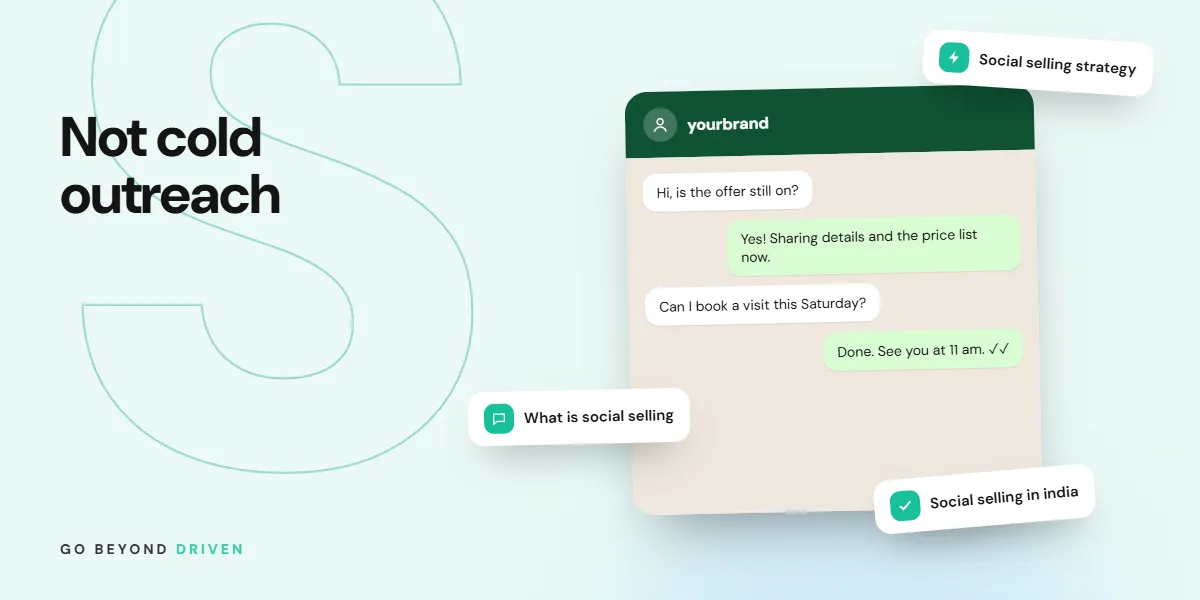
Social selling is the practice of salespeople and founders using social networks such as LinkedIn, Instagram and WhatsApp to find the right buyers, understand what they care about and build relationships, so that sales conversations start warm instead of cold. It is not posting ads, and it is not sending hundreds of connection requests with a pitch attached. In India, where so much business still moves through relationships and referrals, it often fits more naturally than cold calling. This guide explains how social selling differs from marketing and outreach, which platforms suit which businesses, a 30-minute daily routine your team can follow, messages that open conversations, the rules to respect and how to measure it, with a worked example from an industrial supplier in Bhiwandi.
How is social selling different from social media marketing and cold outreach?
Social media marketing is the company talking to many people at once through its brand accounts. Cold outreach is a salesperson messaging strangers with a pitch. Social selling sits between them: individual salespeople, using their own profiles, take part in conversations their buyers are already having, share useful knowledge and start one-to-one conversations when there is a genuine reason.
The difference shows in the first message. A cold message says 'We offer packaging solutions, can we connect?' A social selling message says 'Saw your post about the new plant in Chakan. When you set up dispatch there, happy to share what we learned on corrugated box specs for long-haul routes.' One is about the seller, the other about the buyer.
Does social selling work in India?
It can work well, because Indian buying is often relationship-led. Business owners check a supplier's LinkedIn profile before a meeting, purchase heads ask peers on WhatsApp for recommendations, and founders follow people they trust. A salesperson who is visible and helpful in those places is more likely to be remembered when a need arises.
It works best where deals are considered rather than impulse: B2B products and services, high-ticket B2C such as property, interiors, education and wealth services, and professional services. It works less well for low-priced products where buyers do not want a relationship, only a quick purchase. It also needs patience. A salesperson who comments thoughtfully for a month before the first meeting is not wasting time; they are becoming a familiar name, which is often what gets the first reply in a market where people prefer to buy from someone they already know.
Which platforms suit social selling for your business?
LinkedIn is the main social selling platform for B2B, because buyers list their role and company there and expect professional conversations. Instagram suits founders and consultants in visual or lifestyle categories, such as interiors, events, fitness and fashion manufacturing. WhatsApp is where many relationships deepen after the first contact, through personal chats and, where buyers opt in, a channel or community.
Start your team on one platform where your buyers are most active. A strong profile matters before anything else, so see our guide to LinkedIn profile optimisation for business owners and apply it to every salesperson's profile, not just the founder's.
Where social selling usually fits best:
What does a daily social selling routine look like?
Thirty minutes a day, done consistently, beats a burst of activity once a month. Spend five minutes checking notifications and replying. Spend ten minutes reading posts from a saved list of 50 to 100 target accounts and leaving two or three thoughtful comments. Spend five minutes sending a handful of personalised connection requests with a reason. Spend ten minutes on conversations: following up and moving warm chats to a call.
Once or twice a week, each salesperson should also post something useful from their own experience, such as a lesson from a recent installation, a common buyer mistake or a short video answering a question. Company content can support this, and our post on employee advocacy on LinkedIn explains how to share it without every profile looking identical.
A 30-minute daily routine:
How do you start sales conversations without spamming?
Start from a trigger, keep it short and ask a low-pressure question. Good triggers include a prospect's post, a job change, a company expansion, a comment on your content or a shared event. A useful first message mentions the trigger, offers something relevant and asks if it would help, without a pitch or a meeting request.
Here is a simple example for a commercial interiors firm: 'Congratulations on the new Andheri office, saw it on your page. We put together a short checklist on planning seating for hybrid teams. Would it be useful if I shared it?' Only suggest a call after the person has replied with interest. If they do not reply, one gentle follow-up after a week is enough. Our guide to LinkedIn outreach messages has more templates by situation.
FAQs: How do you start sales conversations without spamming?
Is it fine to pitch in a connection request?
Usually not. A pitch before any relationship is the fastest way to be ignored or reported. Give a reason to connect, then earn the conversation.
Should salespeople use automation tools?
Avoid tools that automate connection requests or messages through unofficial means. They can break platform rules and risk account restrictions.
Worked example: a packaging supplier in Bhiwandi
Say a corrugated packaging supplier in Bhiwandi has three salespeople who mostly cold call. This is a hypothetical example. The company rewrites their LinkedIn profiles around the problems they solve for D2C and FMCG dispatch teams, builds a list of 80 target companies per person and starts the daily routine. Each salesperson posts one short case-style lesson a week, such as how box specs change for monsoon shipping.
After three months, suppose each salesperson averages eight new conversations a month, of which two become sampling requests. Across the team, that is around 24 conversations and 6 sampling requests a month that did not exist before, tracked in the CRM with 'Social' as the source. If even one in four sampling requests turns into a regular order, the routine more than pays for the time spent. The numbers are illustrative; what matters is that the team now measures them.

What rules should salespeople follow when social selling?
Follow platform rules, company policy and the law. Do not scrape contact data, buy lists or mass-message. Do not share confidential client information or promise prices publicly. Salespeople in regulated fields such as financial products, insurance and healthcare must follow the rules set by their regulators on advertising and advice, which can restrict what they post.
Personal data matters too. If salespeople save phone numbers or details from social conversations, store them only for the purpose they were shared, with India's DPDP Act in mind. A short written social media policy for the sales team, covering tone, disclosure and what not to post, prevents most problems. It should also say who owns client relationships and conversation history if a salesperson leaves, which avoids awkward disputes later. This is general guidance, not legal advice.
How do you measure social selling?
Measure conversations and pipeline, not likes. Track, per salesperson, new relevant connections, conversations started, meetings or calls booked, opportunities created and revenue from deals where social was the first touch. Add a source field such as 'Social: LinkedIn' in your CRM so these are counted properly; our guide to CRM for small business covers simple setups.
Review monthly, and give it at least a quarter before judging, because B2B relationships take time. Look for patterns: which types of posts lead to conversations, which triggers get replies and which salespeople need coaching. Share the best real threads, with personal details removed, in a monthly team session, so good habits spread faster than any training deck could manage.
When should you get help, and what does Go Beyond Driven do?
Get help when your team is willing but unsure what to post or say, when profiles look inconsistent, or when leadership wants social selling but has no way to measure it. A good partner trains the team, supports content and sets up tracking, rather than taking over salespeople's accounts.
Go Beyond Driven helps Indian B2B and high-ticket businesses with social selling: profile rewrites, a content bank for salespeople, message frameworks, LinkedIn company content and CRM tracking. See our LinkedIn marketing agency in Mumbai page for how we support sales teams.
Final thoughts
Social selling is simple to describe and hard to keep up: strong profiles, a target list, a daily 30-minute routine, useful posts and messages that start from the buyer's world. Done consistently and measured honestly, it gives salespeople warmer conversations and a steadier pipeline. If you want help setting it up for your team, book a free marketing audit with Go Beyond Driven, or call or WhatsApp +91 91378 79539.


