

Keyword research for small business is the process of finding the exact words your customers type into Google, then choosing the ones you can realistically rank for and matching each to the right page on your website. You do not need expensive tools to do it well. Google autocomplete, People Also Ask, Google Keyword Planner, Google Trends and Search Console are free and cover most of what a small business in India needs. The real advantage comes from local terms, near me searches and the Hinglish phrases people actually use. This guide walks you through a simple, repeatable process with examples from Mumbai businesses, plus the mistakes that waste months of effort.
What Is Keyword Research and Why Does It Matter?
Every search is a customer telling Google what they want. Keyword research is how you listen to those requests at scale. It tells you which services people search for most, how they describe their problems, which areas they mention and what questions they ask before buying. Without it, businesses write pages around their own vocabulary, such as 'comprehensive dermatological solutions', while customers search for 'skin specialist near me' or 'pimple treatment cost'.
For a small business, good keyword research saves money. It stops you from chasing broad terms dominated by national brands and points you toward specific searches where you can win. A bakery in Dadar has little chance for 'cake' but a real chance for 'eggless custom cake in Dadar'. The same research also guides your Google Ads, social captions and even what you name your services, so the effort pays back across your marketing.
Start With Your Customers, Not With Tools
Before opening any tool, write down how real customers describe what you do. Ask your sales or front desk team which questions they hear daily. Read your WhatsApp chats, emails and Google reviews. Note the exact phrases people use, including spelling mistakes, Hindi words and local references. A pest control company might hear 'cockroach treatment for kitchen', 'termite problem in old building' and 'pest control before Diwali cleaning' far more than 'integrated pest management'.
Turn these into a seed list of 20 to 40 phrases grouped by service. Add your locations, such as the areas you serve and nearby landmarks, and the problems you solve. This list gives tools something meaningful to expand on. It also keeps your research grounded in reality, because the best keywords often look obvious once you hear a customer say them, yet competitors miss them because they only look at tool data.
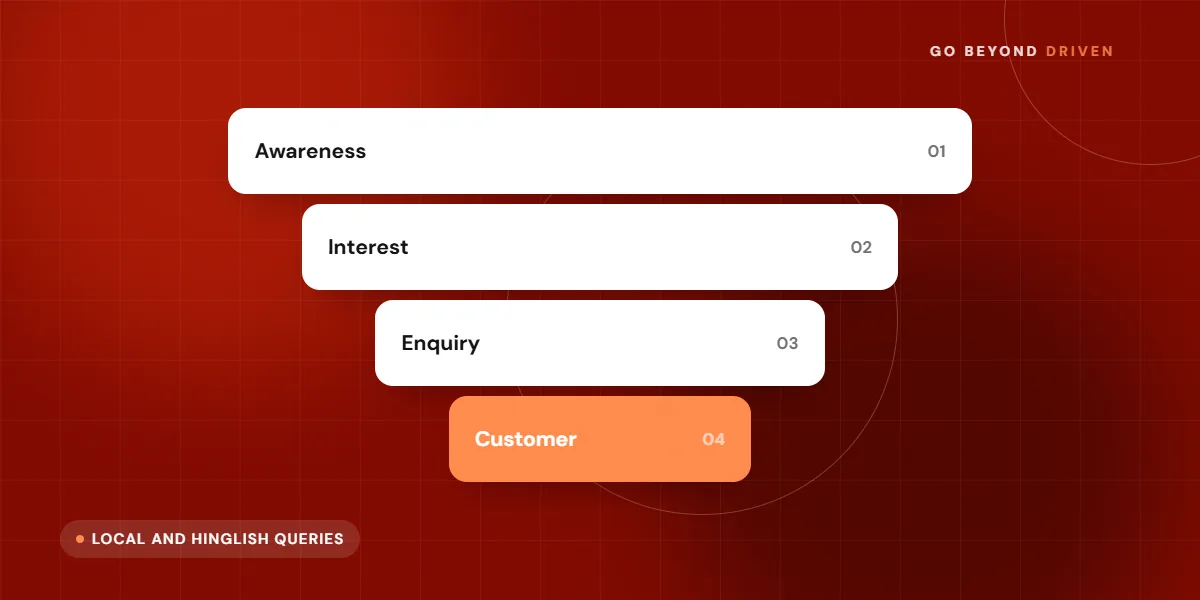
It also helps to look at your business through the customer's journey. Someone who has never heard of you searches for the problem, such as 'water leakage from bathroom ceiling'. Someone comparing options searches for the solution, such as 'waterproofing contractor in Malad'. Someone ready to buy searches for price, timing or your name. Writing a few seed phrases for each stage makes sure your research covers the full path from first question to final enquiry, not just the last click.
Which Free Keyword Research Tools Work Best in India?
Google itself is the best free tool. Type a seed phrase into the search bar and note the autocomplete suggestions, which reflect real searches. Scroll down for People Also Ask questions and Related searches at the bottom of the page. Google Keyword Planner, available free inside a Google Ads account, shows search volume ranges and related ideas, and you can set the location to India, Maharashtra or Mumbai. The ranges are broad without active ad spend, but they are enough to compare options.
Google Trends shows how interest changes over time and across states, which helps with seasonal businesses such as wedding services, festive gifting and coaching admissions. Google Search Console shows the queries already bringing you impressions, often the most valuable data of all. Bing Webmaster Tools includes a free keyword research tool, and free versions of tools like AnswerThePublic, Ubersuggest and Ahrefs' keyword generator offer a limited number of daily searches that are enough for a small site.
Free tools to start with:
How Do You Find Local and Near Me Keywords?
Local searches usually follow a few patterns: service plus near me, service plus area, service plus landmark and best service in area. For a physiotherapist in Ghatkopar, that could mean 'physiotherapist near me', 'physiotherapy clinic Ghatkopar East', 'physio near Ghatkopar station' and 'best physiotherapist in Ghatkopar'. Use autocomplete with each area name to see how people phrase local searches, since some areas are searched with East or West and others are not.
You do not need to stuff 'near me' into your pages. Google handles near me searches using the searcher's location and your Google Business Profile, so focus on clearly stating your area, address and nearby landmarks. Our guide to local SEO and Google Business Profile explains how to support these searches. If you serve several neighbourhoods, plan one useful page per main area, similar to our SEO company in Dadar page, rather than listing twenty areas in a footer.
How to Research Hinglish and Regional Language Queries
Many Indian searchers mix Hindi and English in Roman script, especially on mobile and through voice search. Queries like 'gas stove repair wala near me', 'AC service ka rate', 'shaadi ke liye banquet hall' or 'GST registration kaise kare' are common. Some searchers type in Devanagari, and Marathi searches are significant in Maharashtra for certain topics. Tools often underreport these queries, so autocomplete, Search Console and your own customer conversations are the best sources.
Decide how to use them carefully. For most service businesses, it works well to keep pages in clear English while naturally including common Hindi terms customers use, such as 'tiffin service' or 'mehendi artist'. If a large share of your customers search in Hindi or Marathi, consider dedicated pages in that language with proper hreflang tags. Avoid awkwardly repeating Hinglish phrases throughout English copy, which reads poorly and helps neither customers nor rankings.
FAQs: How to Research Hinglish and Regional Language Queries
Does Google understand Hinglish searches?
Yes. Google handles mixed language queries well and often shows English pages for Hinglish searches when they answer the intent. Including a few natural Hindi terms customers use can still help relevance.
Should I create Hindi or Marathi pages?
Create them if a meaningful share of your customers search in those languages, and write them properly rather than using machine translation alone. Link language versions with hreflang tags.
How do I find voice search keywords?
Look for longer, question style phrases in People Also Ask and Search Console, such as 'which is the best' or 'how much does it cost'. Voice searches tend to be conversational and often local.
Understand Search Intent Before You Pick a Keyword
Search intent is the reason behind a search. Informational searches look for knowledge, such as 'how to start a home bakery'. Commercial searches compare options, such as 'best CA firm for startups in Mumbai'. Transactional searches are ready to act, such as 'book AC service today' or 'buy school uniform online'. Navigational searches look for a specific brand. Each intent needs a different type of page, and Google ranks pages that match the intent behind the words.
The simplest way to check intent is to search the keyword and study the first page. If you see blog posts and guides, Google sees the search as informational. If you see service pages, maps and ads, it is commercial or transactional. A small business should usually prioritise commercial and transactional keywords for service pages, because they bring enquiries, then add informational content to build trust. Matching copy to intent also improves conversions, which our conversion copywriting tips cover in more detail.

How Do You Choose Keywords You Can Actually Rank For?
Small businesses win with long tail keywords, which are longer, more specific searches with lower volume but clearer intent. 'Interior designer' is almost impossible for a new site, while 'interior designer for 2 BHK in Thane' is realistic and closer to a sale. When you check a keyword, look at who ranks on page one. If it is all large portals, national brands and marketplaces, park it for later. If you see small local businesses and thin pages, it is an opportunity.
Score each keyword on three things: relevance to what you sell, how likely it is to lead to an enquiry, and how competitive page one looks. Search volume matters less than people think. A keyword searched 50 times a month by ready to buy customers in your area can be worth more than one searched 5,000 times by students. You can also test value with a small Google Ads budget, and our guide to Google Ads cost in India explains how to set one sensibly.
Map Keywords to Pages and Build a Simple Plan
Put your shortlist into a simple spreadsheet with columns for keyword, intent, rough volume, competition, target page and status. Group closely related keywords together, because one strong page can rank for many variations. For example, 'kids birthday party venue Andheri', 'birthday hall in Andheri West' and 'party venue for kids near Lokhandwala' can all belong to a single, well written page. This prevents several thin pages from competing against each other.
Assign one primary keyword group to each page: your home page, each service page, each location page and each blog post. Use the main phrase naturally in the title tag, the main heading, the first paragraph and a subheading, then write for the reader. List the gaps where no page exists yet and turn them into a content plan, starting with the topics closest to revenue. Review the sheet every quarter using Search Console data to see which new queries are emerging.
Keyword Research Mistakes to Avoid
The most common mistake is targeting only the biggest, broadest keyword in your industry and ignoring everything else. Another is trusting tool volume blindly, since tools often underestimate local, Hinglish and very new searches. Many businesses also create a separate page for every tiny keyword variation, which leads to thin, repetitive content. Others pick keywords without checking intent, then wonder why a blog post never brings sales. A guide that ranks for 'how to clean a sofa at home' attracts do it yourself readers, not people booking a cleaning service.
Keyword stuffing is still surprisingly common. Repeating 'best dentist in Borivali' ten times on a page reads badly and can hurt rather than help. Equally, do not ignore the keywords you already appear for in Search Console, which are often the quickest wins. Finally, keyword research is not a one time job. Customer language, competitors and search features change, so revisit your list every few months and after launching any new service. Keep notes on which keywords actually brought calls and orders, because that record becomes your most reliable guide for the next round of research.
Keyword research checklist:
FAQs: Keyword Research Mistakes to Avoid
How many keywords should a small business target?
Start with 20 to 50 well chosen keywords grouped into 8 to 15 topics that match your main services and locations. Expand gradually as pages begin to rank and bring enquiries.
How often should I redo keyword research?
Review your keyword list every quarter using Search Console data, and do fresh research whenever you launch a new service, enter a new area or redesign your website.
Final Thoughts
Good keyword research is less about tools and more about understanding your customers. Start with the words they use, expand with free tools, add local and Hinglish variations, check intent, choose keywords you can realistically win and give each group a clear home on your website. Done this way, keyword research becomes the backbone of your SEO, ads and content. If you would like experts to build your keyword strategy, explore our SEO services in Mumbai.
Want to know which keywords your business is missing? Book a free marketing audit and we will review the searches you already appear for, the gaps competitors are winning and the pages that need better targeting, then share a simple priority list. Call +91 91378 79539 or email gobeyonddriven@gmail.com. A focused keyword plan helps even a small budget work harder, because every page you publish has a clear job to do.