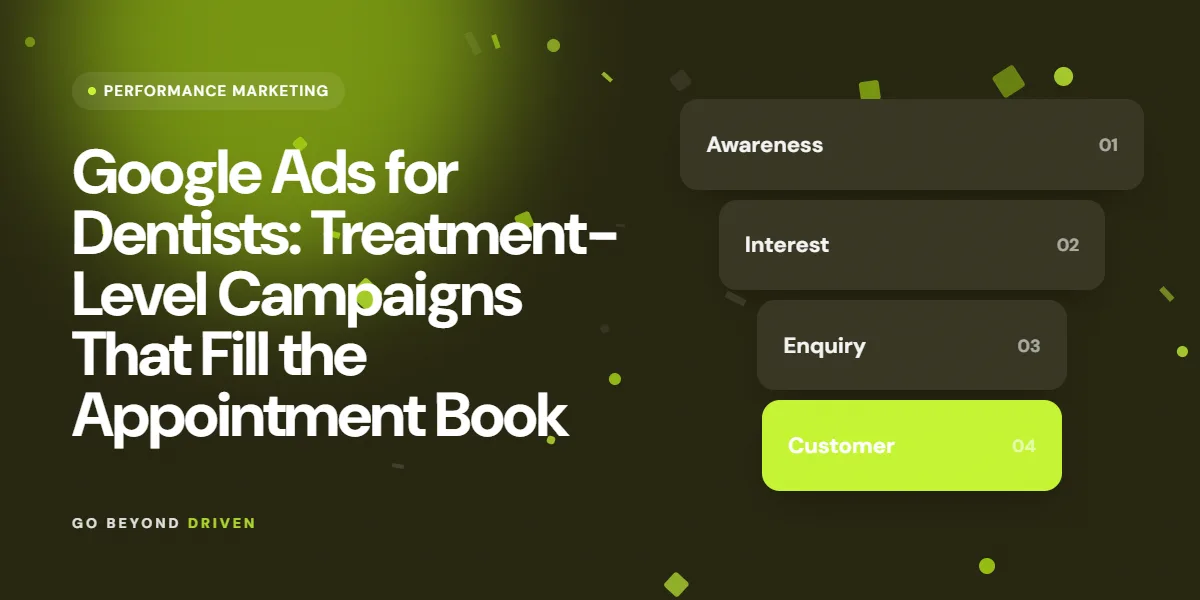
Google Ads for dentists means showing search ads to people near your clinic when they look for a specific dental treatment, such as a root canal, braces, implants or an emergency appointment, and turning those searches into booked and attended appointments. It works because dental needs are urgent or planned, and patients search with clear intent. What makes or breaks a dental account is structure: a toothache search and an implant search differ in urgency, distance travelled, value and how long the patient takes to decide, so they need separate campaigns. This guide shows how to split campaigns by treatment, set sensible radii, write ads that stay within professional rules, handle calls and WhatsApp properly and measure what a new patient is really worth, with a worked example from a clinic in Chembur.
Do Google Ads work for dental clinics?
Yes, Google Ads works well for dental clinics because patients search for specific treatments near them and are ready to book. The clinics that do well treat ads as one part of a system that also includes a strong Google Business Profile, treatment pages on the website and a reception team that answers quickly.
If you are earlier in the journey, our guides to digital marketing for dentists and SEO for dentists cover Maps, reviews and content. This article goes deeper into building the Google Ads account itself, treatment by treatment. It assumes your Google Business Profile is complete, because many patients check your rating and photos before calling, whichever ad they clicked.
Why should each dental treatment get its own campaign?
Each treatment behaves differently, so separate campaigns let you set budgets, radius, schedule and bids to match. Emergency searches such as 'toothache dentist open now' are urgent, local and call-heavy. Checkups and cleaning are lower value but bring families who return. Root canals and crowns sit in the middle. Implants, aligners and smile makeovers are high value, and patients compare clinics, prices and doctors over days or weeks.
Putting these together in one campaign lets Google spend most of the budget on whichever is cheapest to convert, which is often low-value checkups, while the treatments that matter most to the practice get starved. Separate campaigns also let you send each search to a matching treatment page.
Campaigns most dental clinics need:
How far around the clinic should dental ads target?
Target by realistic travel time rather than a fixed number of kilometres. In Mumbai, a patient will rarely cross the city for a cleaning, but may travel further for implants or aligners from a dentist they trust. As a starting point, many clinics use a tight radius of two to four kilometres for emergency and general dentistry, and a wider area covering neighbouring suburbs for high-value treatments.
Keep commute patterns in mind. A clinic in Chembur may draw from Ghatkopar, Kurla and Govandi more easily than from places that look close on a map but take an hour in traffic. Use the location report after a month to see which areas bring appointments, and cut those that only bring clicks. Set location options to people in or regularly in your area.
What rules apply to dental advertising in India?
Dentists in India are expected to follow the Dental Council of India's code of ethics and their state dental council's guidance, which restrict self-promotion, misleading claims and solicitation. Interpretations vary, so check the current rules before running ads. As a general approach, keep ads factual: treatments offered, qualifications, location, timings and how to book. Avoid 'painless guaranteed', 'best dentist in Mumbai', and before-and-after claims that suggest typical results.
Google's healthcare policies apply on top. Its personalised advertising rules restrict using sensitive health information for audience targeting, which can limit remarketing to people who viewed treatment pages, so check what is allowed for your account. For a broader view of medical ad rules, read our guide to Google Ads for doctors. We are a marketing agency, not legal advisers.
What should dental Google Ads say?
Dental ads should tell a patient, in plain words, what you treat, where you are, when you are open and how to book. Useful headlines include 'Root Canal Treatment in Chembur', 'Open Till 9 pm, Monday to Saturday', 'Book on WhatsApp' and 'MDS Endodontist on Panel'. Descriptions can mention sterilisation practice, digital X-rays, payment options and parking, all of which patients ask about.
Add call, location, sitelink and structured snippet assets listing treatments. If your council's rules allow it, a starting price or consultation fee answers a common question and filters out patients looking only for free checkups. Keep every claim verifiable. A clean, factual ad is also easier to get approved and keep approved, which matters when a disapproval can stop a campaign in a busy week.
FAQs: What should dental Google Ads say?
Can a dental ad mention a price?
Many clinics state a consultation fee or starting price, which is factual information. Check your dental council's current guidance, and avoid discount-led or 'cheapest' claims.
Should dental ads use patient testimonials?
Testimonials are sensitive in healthcare advertising. Keep them off ads and use reviews on your Google Business Profile, where patients choose to leave them.
A worked example: a two-chair clinic in Chembur
Say a two-chair clinic in Chembur sets Rs 35,000 a month for Google Ads: about Rs 10,000 for emergency and toothache searches within three kilometres, Rs 10,000 for root canal and crowns, and Rs 15,000 for implants across Chembur, Ghatkopar, Kurla and Sion. All numbers here are hypothetical and only illustrate the method.
Suppose emergency clicks cost around Rs 25 and one in eight becomes a call that books, giving about 50 appointments. Root canal searches might bring about 20 bookings. Implant clicks are pricier, perhaps Rs 80, and bring around 12 consultations a month, of which two or three go ahead. The emergency campaign looks cheapest per booking, but a single implant case may be worth more than many emergency visits, so the clinic judges each campaign by expected treatment value, not by cost per appointment alone.
The clinic also watches capacity. Two chairs can only take so many root canals in a week, so when weekday mornings fill up, it lowers bids for those hours and raises them for evening and Saturday slots that are still open. Ads should fill the gaps in the appointment book, not add pressure where the team is already fully booked.
How should a dental clinic handle calls and WhatsApp from ads?
Answer every call during ad hours, because a missed call from a patient in pain is usually a patient lost to the next clinic on the list. Run ads only when someone can pick up, or use call scheduling so the call button disappears after hours. Give the receptionist a short script: treatment needed, preferred time, and a booking confirmation on WhatsApp.
Track calls as conversions, ideally only calls longer than a set duration, and track WhatsApp clicks separately. Our guide to call tracking for ads explains how. Review a sample of calls monthly to spot questions the ads or website should answer upfront.
Front desk habits that protect ad spend:
How do you measure what a new dental patient is worth?
Measure value over a year, not one visit. A patient who comes in for a toothache may need a root canal and crown, return for cleanings and bring family members. Ask your clinic software or front desk to record the source of each new patient and total treatment billed over the following months, then compare that with what each campaign cost.
Once you have this, upload attended appointments or completed treatment values to Google Ads as offline conversions, so bidding favours searches that lead to real treatment. Even a simple monthly spreadsheet of patient source, treatment and amount is better than judging by cost per click.
When should a dental clinic hire help with Google Ads?
Hire help when ads bring calls but few booked patients, when you cannot tell which treatments are profitable, or when the dentist is spending evenings on the ad account instead of with family. A good agency should understand professional rules, build treatment-level campaigns and pages, set up call and WhatsApp tracking and report appointments and treatment value.
Go Beyond Driven's healthcare digital marketing team works with dental clinics on exactly this: treatment campaigns sized to your chairs and team, factual ad copy reviewed against current guidance, booking-focused pages and simple reporting your front desk can maintain. We also train the front desk on recording patient source, because that one habit makes every later budget decision possible.
Final thoughts
Google Ads for dentists works when campaigns follow treatments, targeting follows travel time, ads stay factual and every call is answered and recorded. Judge results by patient value over time, not by the cheapest click. If you want your dental ads reviewed treatment by treatment, book a free marketing audit with Go Beyond Driven, or call or WhatsApp +91 91378 79539.