

Performance Max campaigns are a Google Ads campaign type that uses your budget, goal, creative assets and conversion data to show ads across Search, YouTube, Display, Discover, Gmail and Maps from a single campaign. Instead of choosing channels and keywords yourself, you give Google's automation the inputs and let it find people likely to convert. That makes it powerful for businesses with clean conversion tracking and a decent volume of leads or sales, and risky for accounts that feed it poor data. This guide explains how it works, when it fits Indian businesses, how to build it properly and how to keep control of where the money goes.
How do performance max campaigns work?
A Performance Max campaign pools your headlines, descriptions, images, logos and videos into asset groups, then assembles ads automatically for each placement. Google's bidding looks at signals such as the search query, device, location, time and the user's past behaviour, and bids toward your chosen conversion goal. You do not pick keywords in the usual way, and you cannot see every placement it uses.
The system learns from conversions, so it only performs as well as the data you give it. If your conversion actions include low value events such as page views, it will happily chase those. If they are real leads, calls or purchases, it has a clear target. This is why tracking setup comes before anything else, and why our conversion tracking setup guide is worth reading first.
Is Performance Max better than a normal Search campaign?
Neither is better in every case. Search campaigns give you control over keywords, match types and exact queries, which suits businesses with a few high intent services. Performance Max gives you reach beyond Search, including YouTube and Display, and works well when you want more conversions at a stable cost and have enough data to feed it.
In practice, many accounts do best running both. Keep your core, high intent Search campaigns on exact and phrase match, and use Performance Max to pick up extra demand and remarketing opportunities. Because Search campaigns with matching keywords generally take priority over Performance Max for the same query in Google's rules, running both does not usually mean bidding against yourself, though you should still check search term insights regularly.
Where each campaign type tends to fit:
When should an Indian business use Performance Max?
It suits you when you already have conversion tracking you trust and at least a steady stream of conversions each month. Online stores with a product feed are the classic fit, since Performance Max can show Shopping ads, and our Google Shopping ads guide covers the feed side. Lead generation businesses such as clinics, coaching institutes and real estate developers can also use it, provided the leads are measured properly.
It is a poor first campaign for a brand new account with no history, a very small budget or a business that cannot tell good leads from bad ones. With only a few conversions a month, the system has little to learn from and spend can wander. Start with Search, collect clean data for a few weeks, then add Performance Max as a second step.
How do you set up a performance max campaign step by step?
First, choose a goal that matches your business, such as leads or sales, and select only the conversion actions that matter. Then set a budget and a bidding strategy, usually Maximise Conversions at the start, moving to a target cost per action or return on ad spend once there is enough data. Next, create asset groups, each built around one product category or service, with its own headlines, descriptions, images and a final URL.
Add audience signals, which are hints rather than hard targets: your customer list, website visitors, and custom segments of searches your buyers use. Finally, set location, language and any URL expansion rules. Turn off automatically created assets if you want strict control over wording, and add brand exclusions and negative keyword lists at account level where available to keep spend on genuinely new customers.
FAQs: How do you set up a performance max campaign step by step?
How long should I wait before judging results?
Allow the learning period, often two to six weeks depending on conversion volume, before making big changes. Frequent edits to budget or targets reset learning and make results harder to read.
Do I need video assets?
No, but supplying them helps. Without a video, Google may generate one from your images, and the quality can be weak. A short, clear video is better.
What are asset groups and how should you structure them?
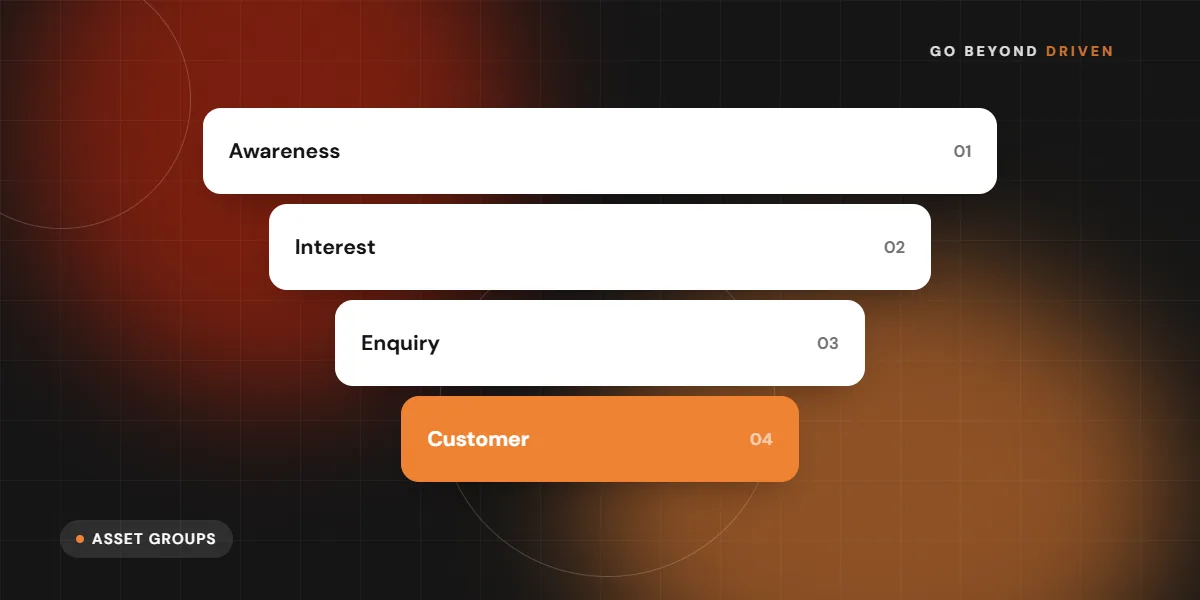
An asset group is the creative bundle plus audience signal that Google uses to build ads. Think of it as an ad group with a theme. A dental clinic might make one asset group for implants, one for braces and one for general check ups, each with its own landing page and wording, so the message matches the person's intent.
Quality matters more than quantity. Give each group several distinct headlines, varied images in square, landscape and portrait formats, a logo and descriptions that mention offers, location and proof points. Avoid stuffing every group with the same generic lines. Review asset ratings and the group's performance monthly, remove weak assets and test new angles using the method in our ad creative testing guide.
How do you control where performance max spends your money?
Control comes from inputs and exclusions rather than switches. Use clean conversion goals, assign realistic values to different lead types, add brand exclusions if you do not want to pay for people already searching your name, and apply account level negative keywords for terms such as jobs, free and course. Restrict locations to areas you actually serve, using presence rather than interest.
Then use the reporting tools. Check the search terms insights and the channel performance report to see how spend splits across Search, YouTube and Display. If Display and YouTube eat budget without conversions, tighten audience signals, improve creative, or move the money back into Search. Treat reports as directional, since Google shows less detail here than in standard campaigns.
Controls worth setting from day one:

What budget does Performance Max need?
There is no official minimum, but automation needs room to learn. A useful rule is to set a daily budget that can plausibly produce a few conversions per day at your expected cost per conversion. If a lead costs Rs 800 and you want about 30 leads in a month, you need roughly Rs 24,000 of monthly spend before GST, and more if costs are higher.
In festive periods such as Diwali, Navratri and wedding season, demand and competition both rise. Raise budgets gradually rather than doubling overnight, and avoid changing targets mid sale. A sudden jump often pushes bidding into an unsettled phase just when you need stability.
Remember to add 18 percent GST to your cash flow plan, and keep a payment buffer so a prepaid balance does not run dry during a strong week. If results look good at your current budget, scale in steps of roughly 15 to 20 percent every week or two, watching cost per conversion each time. If cost climbs sharply after a raise, hold the new level for a while before deciding whether to continue or step back.
Mistakes that make Performance Max underperform
The common ones are tracking page views as conversions, mixing unrelated products in one asset group, letting it spend on branded searches and reporting that as a win, and judging performance after three days. Another is sending all traffic to the homepage instead of focused landing pages, which hurts conversion rate no matter how good the targeting is.
Also watch lead quality. Automation optimises for what you tell it counts, so a flood of cheap form fills from the wrong people is a data problem, not a success. Feed back qualified leads from your CRM where possible, and ask your sales team weekly which enquiries were real. If they say quality dropped, change the conversion setup before you change the budget.
Final thoughts
Performance Max campaigns reward businesses that do the basics well: reliable tracking, clear offers, strong creative and patience. They are not a shortcut for a weak account, but they can scale a proven one. If you would like a second opinion on whether your account is ready, Go Beyond Driven can review your setup in a free marketing audit, or you can explore our performance marketing agency services.