
For most paid campaigns that aim to generate enquiries, a dedicated landing page beats your general website, because it matches one ad to one offer and removes the distractions that let visitors wander off. A website is built to explain your whole business to many types of visitor. A landing page is built to get one type of visitor to do one thing, such as call, fill a form or message you on WhatsApp. That said, the answer is not always a landing page. Some businesses, especially online stores and brands with deep catalogues, do better sending traffic straight to a well organised category or product page. This guide shows you how to decide, what a good ad destination contains and how to prove the answer with your own numbers.
What is the difference between a landing page and a website?
A landing page is a single page created for one campaign, one audience and one action. It usually has no main menu, no blog links and no footer maze. A website is a collection of pages, such as home, about, services, pricing and contact, that together describe the business. A homepage tries to serve everyone: a new visitor, an existing customer, a job seeker and a vendor.
That difference matters because paid clicks cost money. When someone clicks an ad for a specific service, they have already told you what they want. A landing page continues that conversation. A homepage often restarts it, asking them to find the right page themselves. Many will not bother, and you pay for every one who leaves.
Should you send ad traffic to your homepage?
Usually not, if your goal is leads or sales for a particular service. A homepage carries several messages and several exits, so the visitor who clicked an ad about, say, a 2 BHK renovation in Andheri lands on a page that talks about everything the company does. The mismatch between the ad promise and the page can lower the landing page experience that Google considers when it prices your clicks.
There are exceptions. If your ad is for your brand name, a homepage is fine because the visitor already knows you. If your site is a small, tight, single-service site with a clear offer above the fold, a form and proof, the homepage is effectively a landing page already. The test is simple: could a stranger understand the offer and act on it within ten seconds, without scrolling or clicking a menu?
When does a full website work better than a landing page?
A website or a deep site page works better when the buyer needs to browse and compare. An online fashion or jewellery store is the clearest case: shoppers want filters, sizes, reviews and several options, so ads should go to a relevant collection or product page on the main store, not to a one-page microsite. The same applies to marketplaces and businesses with long, research-heavy buying journeys, such as higher education or high-value B2B software.
In these cases the question changes from landing page versus website to which page on the website. Send the ad to the most specific page that answers the click, and make sure that page has its own clear call to action. A category page that opens with the exact product the ad showed will usually outperform a generic shop homepage.
A website page is usually the better ad destination when:
What should a landing page for ads contain?
A good ad landing page repeats the promise of the ad in its headline, shows the offer and the action button without scrolling on a phone, and then gives just enough proof to remove doubt. That proof can be real client logos you have permission to show, genuine reviews, certifications, a short process or a clear guarantee that you can honestly keep. Keep the form short: name, phone and one qualifying question is often enough.
Most Indian buyers will also want a quick, low-pressure way to talk. A click-to-call button and a WhatsApp button next to the form often capture people who would never fill a form. Page speed matters a lot on mobile data in a city like Mumbai, where many visitors click from a train or a crowded commute. Our landing page design best practices guide covers the layout in detail.
Elements most ad landing pages need:
How many landing pages do you need?
One for each distinct offer and audience you advertise to, not one for each keyword. If you sell three services, build three pages. If you serve two clearly different audiences with the same service, such as homeowners and builders, a page for each can make sense. Beyond that, extra pages add maintenance without much gain until you have enough traffic to test them.
Start with the one service that brings the most profit and send your best traffic there. Once that page converts steadily, copy the structure for the next service. Avoid cloning pages with only the headline changed across dozens of locations, because thin near-duplicate pages are hard to maintain and add little for the visitor.
FAQs: How many landing pages do you need?
Can a single page website work as a landing page?
Yes, if it focuses on one offer, one audience and one action. A single page that lists every service and has a full navigation menu behaves more like a brochure site than a landing page.
Do I need a separate landing page for each Google Ads ad group?
Not always. Ad groups that share the same offer can use the same page, as long as the headline and content match the searches. Separate pages help when the services are clearly different.
How do you test which destination converts better?
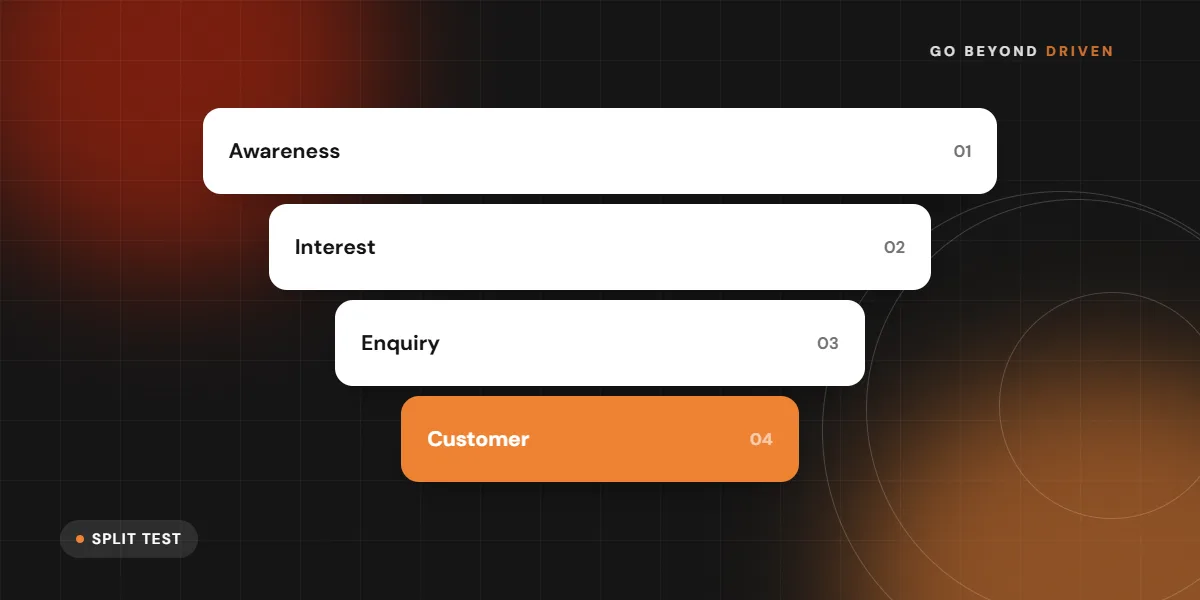
Run a simple split test using the same ads, audience and budget, and change only the destination. Send roughly half the traffic to the landing page and half to your website page for at least two to three weeks, so that weekday and weekend behaviour both appear. Compare cost per lead and lead quality, not just form fills, because a page that attracts careless enquiries can look good on volume and bad on sales.
Make sure tracking is correct before you start. Count form submissions, calls and WhatsApp clicks as conversions, and tag each page so you can see the source. Do not call a winner after a handful of leads. Tools like Google Ads experiments or a basic A/B tool let you split traffic cleanly, and a result that holds across a few hundred visits is more trustworthy than a good-looking first week.
What mistakes make ad landing pages fail?
The most common mistake is a mismatch: the ad promises a discounted consultation, but the page opens with a company story. The second is clutter, such as a full menu, social icons and blog links that give visitors ways out. The third is a slow, heavy page with large images that takes many seconds to load on mobile data, so people leave before they see the offer.
Other frequent problems include a long form with ten fields, no phone number, a button that says only Submit, forms that break on some phones and thank-you pages that are not tracked. Also check that your page works with your sales process. If leads arrive at night and nobody replies until the next afternoon, even a great page will look like it underperforms. Read why a site may be failing in our guide on why your website is not getting leads.
When does it make sense to hire help for landing pages and ads?
It makes sense when you are spending steadily on ads, getting clicks but few enquiries, and you cannot tell whether the problem is the ad, the page or the follow-up. That is a diagnostic job, and an outside view often finds issues quickly: a mismatched headline, a missing tracking tag, a form that fails on certain phones or a page that loads slowly.
At Go Beyond Driven we plan the ad, the landing page and the tracking together, so that nothing is lost between them. Our Google Ads team in Mumbai builds campaigns with pages that match each offer, and our conversion rate optimisation services test headlines, forms and layouts using your real traffic. We do not promise a fixed number of leads, because results depend on your market and offer, but we do show you what is working and why.
Final thoughts
Choose a landing page when you want one action from one audience, and a deep, relevant website page when buyers need to browse and compare. Whichever you choose, match the page to the ad, load it fast on mobile, make contacting you easy and track every enquiry. Then test, rather than guess. If you would like a second opinion on where your ad traffic is landing and whether it is converting, book a free marketing audit with Go Beyond Driven, or call +91 91378 79539.