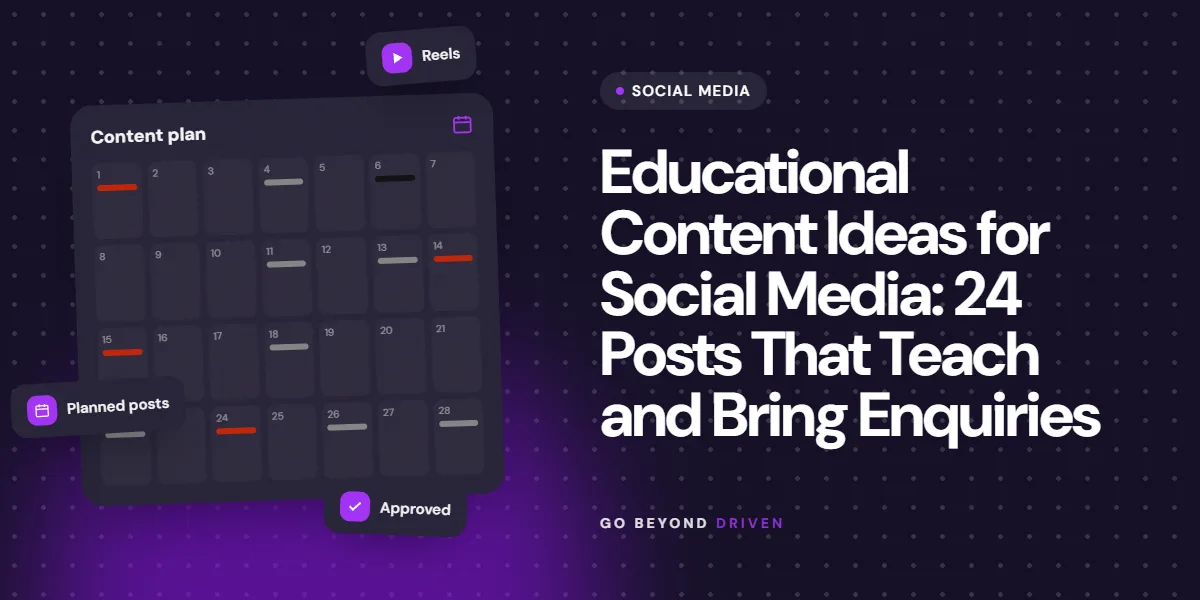
Educational content for social media is any post, Reel, carousel or video that teaches your audience something useful about the problem your business solves, such as how to choose, what something costs, what goes wrong and how to fix it. Done well, it builds trust before a buyer ever messages you, because they have already learned from you. The catch is that many educational posts teach generic facts and never connect to the business. This guide groups 24 educational content ideas by what a buyer is trying to learn at each stage, shows which formats suit each, covers claim rules for health, finance and education businesses in India, and walks through planning a month of posts from real customer questions.
What is educational content on social media?
Educational content is content whose main job is to help the viewer understand or do something better, rather than to announce or sell. A dentist explaining why gums bleed, a CA explaining which expenses a freelancer can claim, or an interior designer explaining how much storage a 1BHK kitchen really needs are all educational posts.
The best educational content is specific to your customers and your expertise. Generic tips anyone could copy from a search result rarely build a reputation. Lessons drawn from what you see every day, the questions customers ask at the counter, and the mistakes you fix for them, are what make people think you are the one to call. Our post on thought leadership content covers the opinion-led end of the same spectrum.
Educational content brings enquiries because it answers questions that buyers have before they are ready to talk to a seller, and it shows your competence in the process. Someone who has learned from five of your posts arrives in the DMs already trusting you, often with better questions and fewer price objections. It also earns the behaviours platforms describe valuing, such as saves, shares and longer watch time, since people keep useful posts to refer to later and send them to family or colleagues. And it gives your sales team ready answers: a link to a carousel explaining a process is often more convincing than a long typed reply on WhatsApp.
Which educational content ideas help people understand their problem?
At the first stage, people do not know what is wrong or what their options are, so teach them to name and recognise the problem. These posts are usually the widest reaching, because many more people have the problem than are shopping for a solution, and they introduce your business to people who will need you in a few months.
Good ideas here: signs you have a problem, such as five signs your waterproofing has failed before the monsoon; jargon explained in plain words; why something happens; seasonal checks; a myth versus fact series; and a what-is-normal post that tells people when to worry and when not to. Keep myth-busting factual and avoid fear-mongering, especially on health topics.
Ideas for the problem stage:
Which educational ideas help people choose a solution?
Once people know the problem, they compare options, so teach them how to decide. This is where educational content starts to sell, because you set the criteria they use to judge every provider, including you. Be fair to the alternatives; balanced comparisons are trusted far more than ones that always crown your own option.
Ideas for this stage: how to choose a provider, with a checklist of questions to ask; option A versus option B, such as laminate versus veneer, or term versus endowment insurance explained neutrally; what things really cost and what drives the price, in hedged ranges; what is included and what is extra; red flags to avoid; and a step-by-step of what happens after you sign up. These posts make excellent carousels, and our Instagram carousel ideas show layouts that work.
Which educational ideas keep existing customers engaged?
Teach customers how to get more from what they bought, which builds loyalty, reduces complaints and prompts referrals. These posts are often ignored by businesses, yet they are some of the easiest to make because the answers already live in your after-sales conversations.
Ideas: care and maintenance guides; how to use a feature most people miss; seasonal reminders such as servicing an AC before summer; troubleshooting the five most common issues; how to tell when something needs replacing; and advanced tips for regulars. A gym might teach correct form for a machine; a skincare brand might explain how to layer products; a car dealer might explain service intervals.
Ideas for existing customers:
Which educational ideas show how you work?
Some of the most persuasive educational posts teach by opening up your own process, so viewers learn something and see your standards at the same time. They answer the unspoken question every buyer has: what will it actually be like to work with this business?
Ideas here: a walkthrough of your process from first call to delivery; why we do it this way, explaining one choice competitors skip; a mistake we see often and how we fix it, with any customer details removed; the tools of the trade explained; a day in the life of a job, such as a kitchen installation or a clinic's sterilisation routine; and a live or recorded question and answer session. For ideas on filming these, see our post on behind-the-scenes content ideas.
Ideas that teach through your process:
Which formats work best for educational content?
Carousels suit step-by-step processes, checklists and comparisons, because people can swipe at their own pace and save them. Short Reels and Shorts suit quick demonstrations, single tips and myth-busting with a clear hook. Longer YouTube videos suit detailed walkthroughs and buying guides. LinkedIn text posts and documents suit B2B explanations and frameworks.
Infographics work well for numbers, timelines and processes; our guide to infographics for social media explains how to make them readable on a phone. Stories with quiz stickers can test what people know before you teach it. Match the format to how complex the lesson is: one idea per Reel, one process per carousel.
FAQs: Which formats work best for educational content?
Will educational content give away my expertise for free?
Usually it does the opposite. Explaining what to do rarely replaces paying an expert to do it, and it proves you know the subject. Teach the what and why freely; your service delivers the how, done properly.
How long should an educational Reel be?
As long as the single lesson needs and no longer. Many quick tips work in well under a minute. If a topic needs several minutes, a carousel or a YouTube video usually suits it better.
What rules apply to educational content in regulated sectors?
Educational posts by doctors, clinics, financial businesses and education providers must follow the rules for their field, even when they are framed as general tips. Health content should not promise cures or outcomes, and medical professionals have their own professional conduct rules on advertising. Content that recommends specific investments can fall under SEBI rules on investment advice, so financial businesses should check with their compliance adviser.
Education businesses should not make unverified claims about ranks, selections or placements, and ASCI's advertising code applies to claims in marketing content generally. Keep educational posts general, cite official sources for figures, add a short not-advice line where appropriate, and invite people to consult a qualified professional for their own case. This post is not legal advice; check the rules for your sector.
Worked example: a month of educational posts for a solar installer
Say a rooftop solar installer in Navi Mumbai wants more enquiries from housing societies and bungalow owners. A hypothetical approach: the sales team lists the 12 questions they hear most often, such as how much roof space is needed, what happens during the monsoon, whether net metering is available and how long payback typically takes. Each question becomes one post.
The month might include four carousels on sizing, cost drivers, the approval process and maintenance; four Reels showing a panel cleaning, a site survey, an inverter display explained and a myth about cloudy days; two Stories quizzes; and two posts answering society committee questions. Cost and subsidy posts use hedged ranges and link to official sources, with a line asking people to check current schemes. Each post ends with an invitation to DM a roof photo for a rough assessment, which connects teaching to enquiries.
How do you turn educational content into leads?
End each educational post with a soft, relevant next step: DM a keyword for a checklist, book a free assessment, send a photo for a quick opinion, or visit the store for a demo. Keep the caption's call to action tied to the lesson; a post on choosing tiles can invite people to WhatsApp their room size for suggestions.
Save your best educational posts into Highlights or a pinned post, and share links to them in sales conversations. Track which topics bring DMs, not just likes, and make more of those. Our list of social media post ideas for business includes promotional and behind-the-scenes formats to mix in, so the feed does not become a textbook.
When should you get help creating educational content?
Get help when you know your subject but lack the time to turn it into regular posts, or when your posts are accurate but not getting seen or saved. An agency can interview you or your team monthly, turn the answers into scripts and carousels, and keep claims within the rules.
Go Beyond Driven's social media marketing agency builds educational content plans around the real questions your customers ask, produces carousels, Reels and infographics, and tracks which topics bring enquiries. You stay the expert; we handle the planning, writing, design and posting.
Final thoughts
The strongest educational content ideas for social media come from your own sales conversations: the problems people cannot name, the choices they struggle with and the things customers get wrong after buying. Teach those clearly, in the right format, within your sector's rules, and end each post with a natural next step. If you want an outside view on your content and how it turns into enquiries, book a free marketing audit with Go Beyond Driven, or call or WhatsApp +91 91378 79539.