






Your website is often the first real interaction a customer has with your brand, and it needs to do more than just look good, it needs to communicate who you are, build trust, and guide visitors toward action. A successful brand website is built on strategy as much as design. Here are the 7 key elements every brand website needs to stand out and perform.
Every strong brand website starts with a clear brand identity translated into digital form, consistent logo placement, color palette, typography, and imagery that instantly signal who you are and set you apart from competitors. A brand identity that feels disjointed from page to page, using one font on the homepage and another buried in a services page, quietly erodes the trust you're trying to build with every visitor who notices the inconsistency. Getting this right early means every future page you add reinforces the same story instead of fighting against it.
This identity is only effective when paired with a strategic user experience (UX), one that maps out how visitors move through the site, ensuring every page has a clear purpose and a logical path toward the next step. Good UX anticipates the questions a visitor is silently asking, what does this company do, can I trust them, what happens if I click this, and answers them before frustration sets in. Supporting that experience is intuitive navigation and information architecture, a menu structure and site layout that lets visitors find what they need in as few clicks as possible, without confusion or friction. When navigation is well organized, visitors spend their attention on your content and offer rather than on figuring out where to go next.
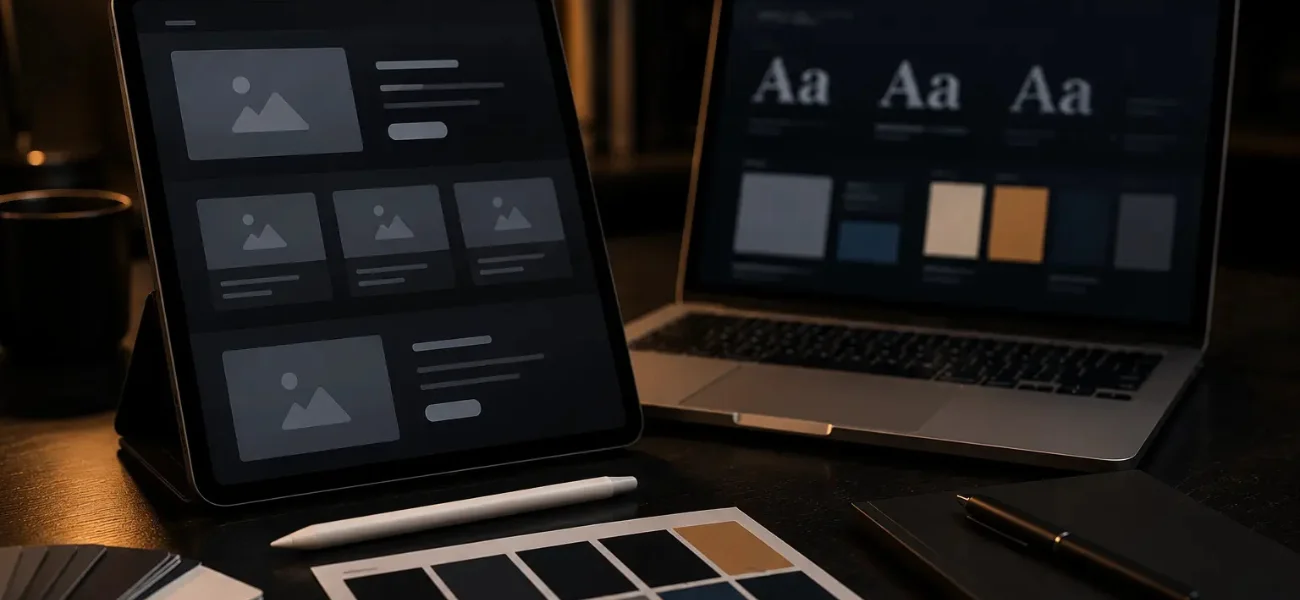
A brand website also needs compelling, benefit-driven messaging, copy that speaks directly to your audience's needs and clearly articulates your value proposition rather than generic, templated language. Visitors rarely read every word on a page, so the words that do get read, headlines, subheads, button labels, need to work hard, framing what you offer in terms of the outcome the visitor cares about rather than a list of features. This is reinforced by high-quality, on-brand visuals, custom photography, illustrations, or video that reflect your brand's personality and build an emotional connection with visitors far more effectively than stock imagery. Generic stock photos are instantly recognizable as filler, while original visuals signal that a real, considered brand is behind the site.
Mobile-first, responsive design is equally essential, since the majority of traffic now arrives from phones and tablets, and a site that adapts seamlessly across devices keeps visitors engaged and improves your search rankings on Google. Designing for mobile first, rather than shrinking a desktop layout down as an afterthought, tends to produce cleaner, faster, more focused pages on every screen size. Fast loading speed and clean technical performance round out the list, since even the best design and messaging fail if pages load slowly or break on certain devices, causing visitors to bounce before they see what your brand has to offer. A brand site that feels sluggish undercuts the very sense of quality and professionalism the design was meant to project.

Finally, every brand website needs clear, strategically placed calls-to-action, buttons and prompts that guide visitors toward a specific next step, whether that's booking a consultation, making a purchase, or getting in touch, turning passive browsing into measurable business results. A CTA works best when it appears at natural decision points in the visitor's journey, right after a benefit has been explained or a question has been answered, rather than being scattered randomly across the page.
Bringing these 7 elements together transforms your website from a simple digital brochure into a true brand asset, one that builds trust, reflects your identity, and consistently converts visitors into customers. When identity, UX, messaging, visuals, responsiveness, performance, and calls-to-action are all working in concert, the website stops being just a cost of doing business and becomes one of your most productive members of the team.